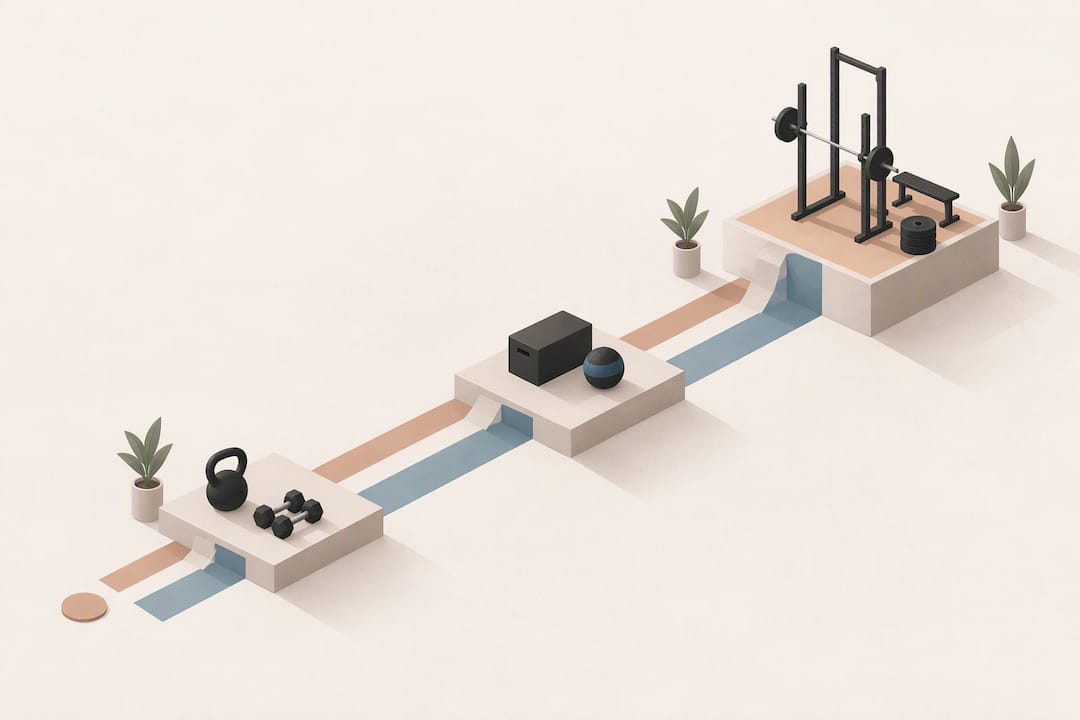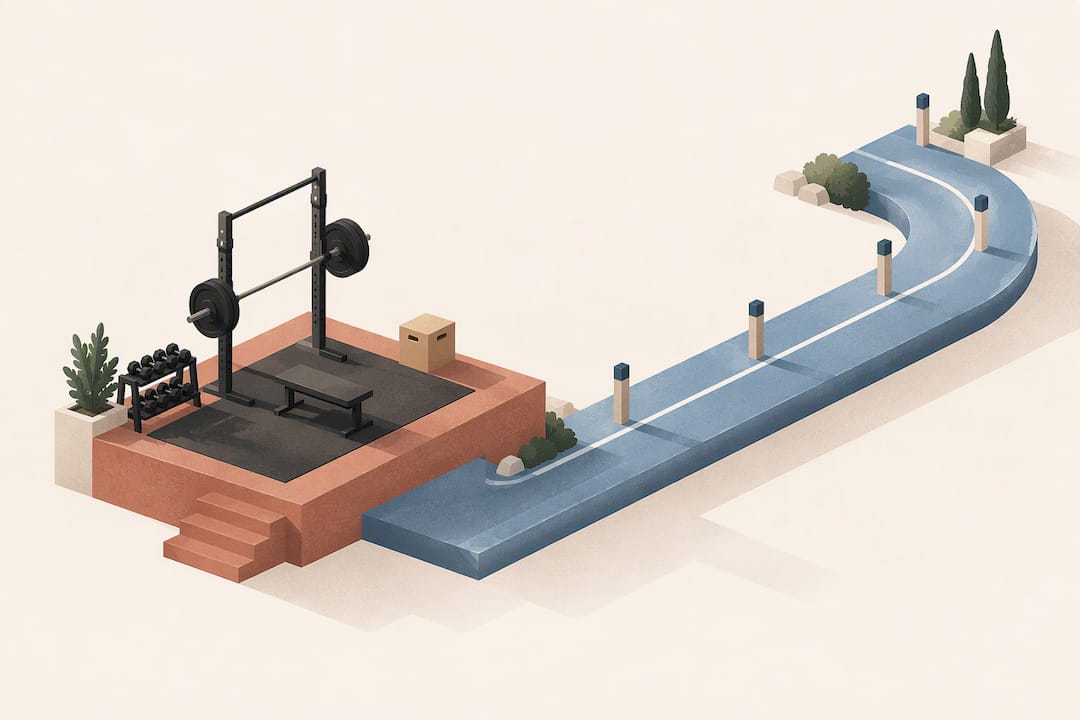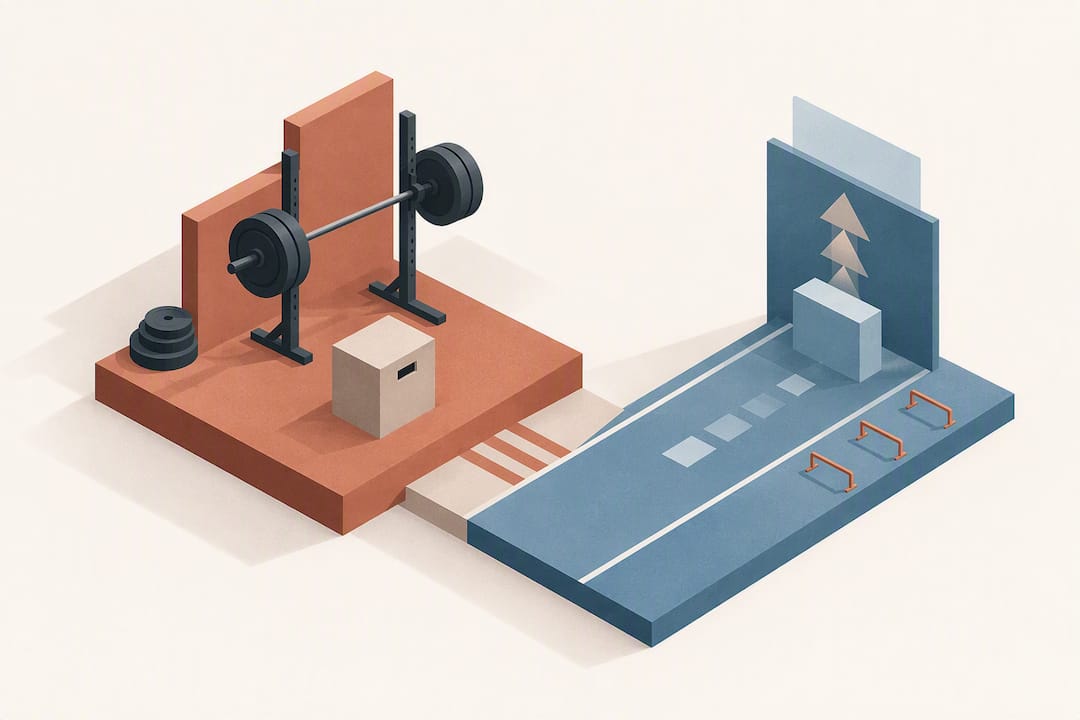
Strength is your ability to produce maximum force, full stop. Power is how quickly you can produce force, which is why a slow, heavy squat and an explosive jump squat train two different things, even though they look similar. The practical answer: build a strength base first, then layer in power work for speed, sport, and everyday function like catching yourself on a kerb. Both matter, and the UK Chief Medical Officers’ physical activity guidelines treat muscle-strengthening work as a public health basic, not an optional extra.
TL;DR:
- Qualitative evidence suggests low to moderate intensity power training can yield similar gains to high-intensity protocols in older adults, making lighter loads safer and effective.
- Power exercises should be performed early in sessions while fatigue is low to maximize neural output and reduce injury risk.
- Structured programming must focus on load, tempo, and movement intent rather than exercise name, as many gym movements can serve both strength and power depending on how they are performed.
- Beginners, injured individuals, and those over 60 should prioritize building a strength base first, while more experienced athletes can add power work after establishing strength.
- Supervised, small-group coaching ensures proper technique and individualized adjustments, minimizing injury risk and optimizing results in both strength and power training.
Strength training builds your maximum force output, the most weight you can move for a given exercise, often measured as a one-rep max (1RM). It’s the foundation everything else sits on. If you can’t produce much force at all, you’ve got nothing to move quickly, which is exactly why power training without a strength base tends to stall out fast.
The movements are familiar to anyone who’s set foot in a gym:
Strength work is generally programmed heavier and slower than power work. Typical ranges sit around a high percentage of your 1RM for a few reps per set, with longer rest between sets to recover enough to lift with good form again. Progress comes from progressive overload: adding a little weight, a rep, or a set over weeks, not chasing a personal best every session.
This matters more than most people realise. The UK Chief Medical Officers recommend adults do muscle-strengthening activities for all the major muscle groups at least twice a week. Not because it’s trendy, but because strength underpins bone density, joint stability, and how well you function as you age. Skip it, and you’re building a house with no foundation.
Power is force multiplied by velocity. You can have plenty of strength and still be slow to use it. Power training closes that gap by teaching your body to produce force fast, which is a completely different skill from grinding out a heavy squat.
Typical power exercises include medicine-ball throws, jump squats, kettlebell swings, Olympic lift variations, and sled pushes.
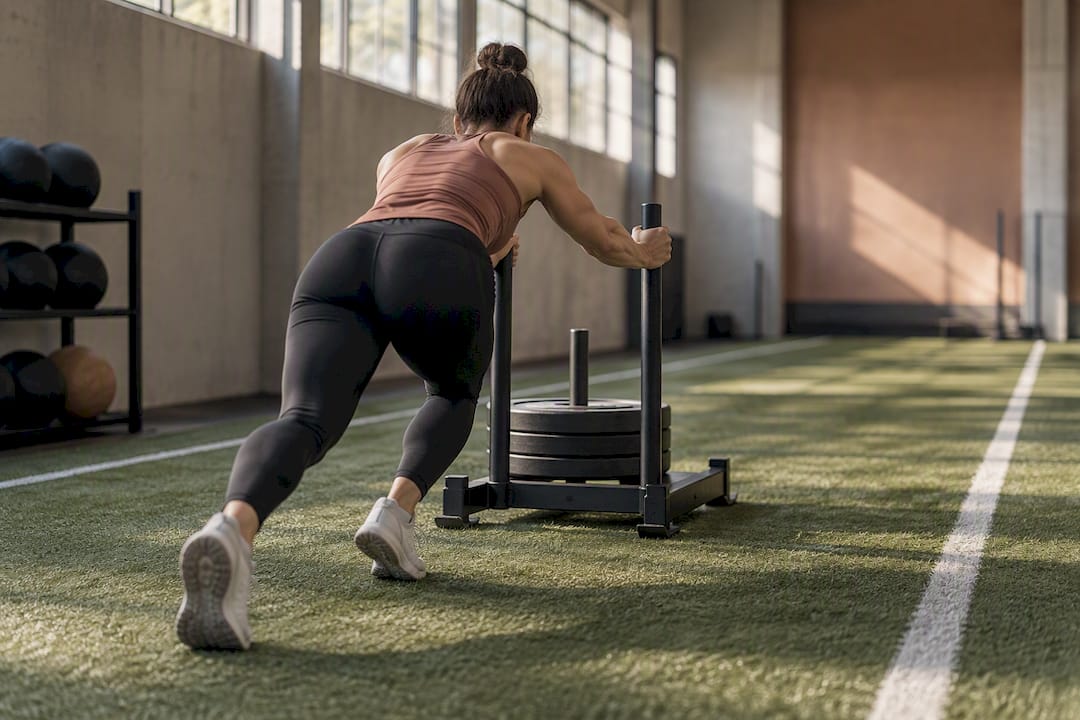
Programming for power looks nothing like a strength session. Loads are lighter, usually around half or less of your maximum, and reps stay low because the focus is on speed of movement, not fatigue. The moment reps start slowing down, the set has done its job, stop it there. Rest periods are also longer relative to the work done, since power depends on the nervous system firing fresh, not on grinding through tiredness. Measuring power is more varied than strength testing: jump height, sprint times, and components of tests like the Short Physical Performance Battery all capture different slices of it, and practical prescriptions from that same review consistently place throws, jumps, and fast lifts early in a session while the nervous system is fresh.
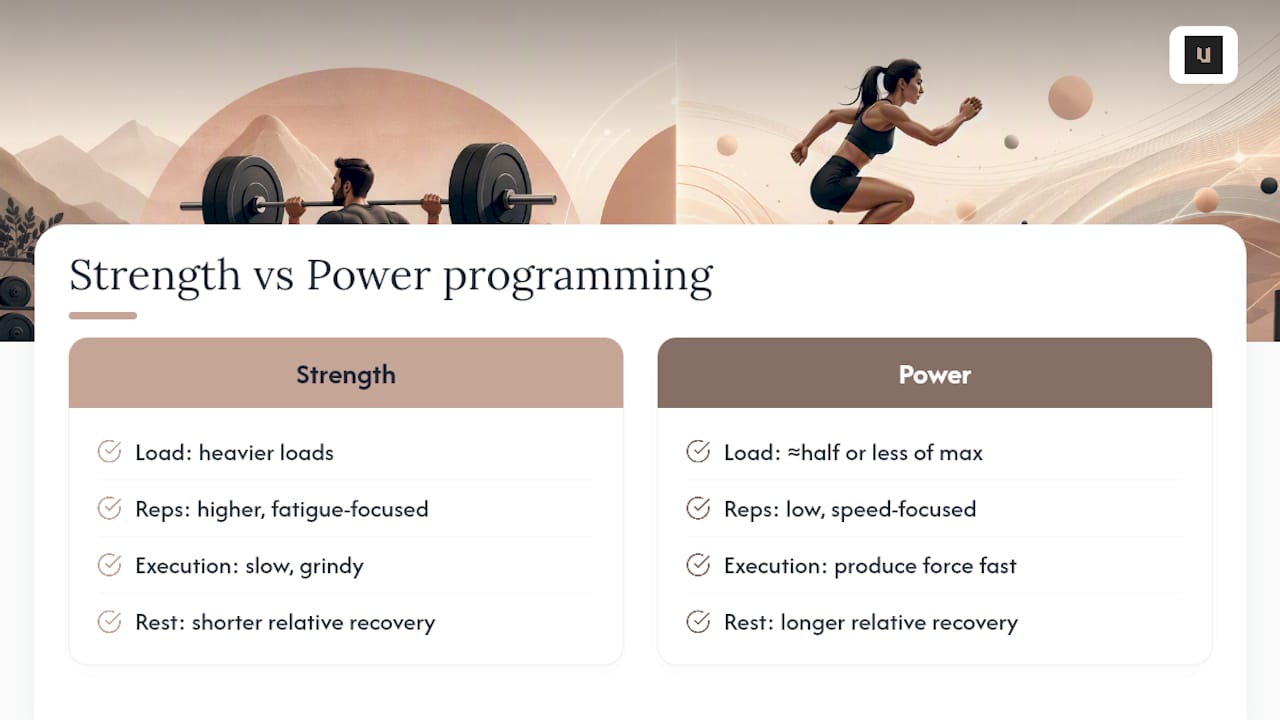
Take a barbell squat. Load it heavy, move it slowly and deliberately, and you’re training strength. Load it lighter, move explosively, and turn it into a jump squat, and you’re training power. Same movement pattern, completely different outcome, because the variable that changed wasn’t the exercise, it was the load and the intent behind the lift.
This is the part most gym-goers never get taught, and it’s the single most useful thing to understand about programming for either quality.
The Solent University systematic review makes a point worth remembering here: the exercise label matters less than the programming variables underneath it. Two people doing “squats” three times a week could be training entirely different physical qualities depending on the numbers on the bar and how fast they’re moving it.
The honest answer is almost everyone benefits from both, but the emphasis shifts depending on who you are and what you’re trying to achieve.
A simple checklist: if you’re new to training, injured, or over 60 with limited resistance experience, prioritise strength for the first several months. If you already have a decent strength base and want more speed, athleticism, or sport performance, start layering power in. This is also where the difference between powerlifting vs bodybuilding becomes relevant for anyone weighing structured strength sports against pure aesthetic training, since neither directly trains speed of force production the way dedicated power work does.
Session order isn’t an afterthought, it changes the outcome of the entire workout. Power work depends on a fresh nervous system, so it has to come first, while strength and conditioning follow once you’ve already peaked your speed output.
Across a week, a sensible microcycle might run two strength-focused sessions and one power-focused session, or blend both qualities within the same two or three sessions depending on how much time you have. The Eurapa 2022 review backs this power-first sequencing directly: doing explosive work early, while fatigue is low, produces better speed output than bolting it onto the end of a session.
Pro Tip: If your jumps or throws start looking sloppy or slowing down noticeably, that’s your body telling you the set is over, not a reason to push through for one more rep.
One thing to flag honestly: chasing frequent 1RM tests is a common trap. Testing your true max more than occasionally adds unnecessary fatigue and injury risk without much programming benefit. Progress is better tracked through rep quality, bar speed, and how the same loads feel week to week.
The most common mistake is treating “move fast” as permission to abandon good positioning. Speed without control isn’t power, it’s just risk. A jump squat with knees caving in, or a kettlebell swing where the back rounds under fatigue, teaches your body bad patterns faster than it builds anything useful.
Watch out for these recurring errors:
A 2023 systematic review found high-velocity power training produced similar overall effects to traditional strength training for functional performance in older adults, with only weak-to-moderate advantages on specific tests. That’s a useful reality check against anyone selling power training as a wholesale replacement for strength work. It isn’t. It’s a complement, and one that needs coaching attention, not a free pass to skip form.
Pro Tip: Individualised coaching in a small group, rather than a generic class, is where regressions and load adjustments actually get applied person by person instead of guessed at.
This is precisely where supervised, small-group coaching earns its keep. Someone watching your landing mechanics or bar speed catches problems before they become injuries, which a mirror or a phone camera rarely does.
— Vitalij
Here’s where the evidence gets nuanced, and where a lot of fitness content oversimplifies. Power training does produce some real benefits over traditional strength training in older adults, but the certainty behind those findings is lower than most marketing suggests.
| Question | What the evidence shows | Certainty |
|---|---|---|
| Does power training beat strength training for function in older adults? | Modest improvements found in some functional tests | Low certainty (Solent University, 2022) |
| Does high-velocity training outperform traditional resistance training overall? | Similar overall effects, weak-to-moderate advantage on select tests | Low-quality evidence (LJMU systematic review, 2023) |
| Does training intensity matter for power gains in older adults? | Low and moderate intensity produced similar power gains to high intensity | Supported by a 2023 review (Sports Medicine Open) |
| Does power beat strength for youth athletic outcomes? | Power training improved jump height more; strength training sometimes better for sprint measures | Task-specific, mixed results (PMC systematic review, 2017) |
The intensity finding matters practically: if low and moderate intensity power work produces gains similar to high intensity, older adults and cautious beginners don’t need to chase maximal loads or speeds to see benefit. That’s a real safety win, since lighter loads carry less injury risk while still delivering results.
The honest takeaway across all of this: neither approach wins outright. Evidence supports using both, individualised to whichever quality, force or speed, is actually limiting a person’s performance, rather than picking a side based on which sounds more exciting.
Templates help more than abstract advice, so here are three starting points depending on where you’re at.
Beginner adult, strength-first, twice a week. Warm up 5 to 10 minutes. Goblet squat, 4 sets of 6 reps. Dumbbell row, 4 sets of 6 reps. Kettlebell swing (light, technique focus), 3 sets of 8 reps, more about learning hip drive than raw power yet. Finish with a plank hold, 3 sets of 30 seconds.
Older adult, low-impact and strength-focused. Warm up with mobility work, 8 to 10 minutes. Sit-to-stand or box squat, 3 sets of 8 reps. Seated row machine, 3 sets of 8 reps. Step-ups (controlled, not explosive), 3 sets of 6 reps each leg. Optional: light medicine-ball chest pass against a wall, 2 sets of 6, for gentle speed exposure without high-impact landing demands.
Athlete, power-first with strength and transfer work. Warm up thoroughly, 10 to 15 minutes including movement-specific drills. Hang clean or box jump, 4 sets of 3 reps, full recovery between sets. Trap bar deadlift, 4 sets of 4 reps at 80% or so of 1RM. Sled push (short, hard efforts), 4 sets of 15 to 20 metres. Sport-specific transfer drill relevant to their event, since power built in the gym only counts if it shows up on the pitch or track.
Each of these can flex up or down depending on experience, injury history, and how a person responds week to week, which is exactly why generic templates only get you so far without someone adjusting them in real time.
Small groups let us do what a generic class or a printed programme can’t: adjust load, tempo, and exercise selection person by person, in real time, while everyone trains together. Someone building a strength base after time off moves at a different pace to someone chasing speed for a five-a-side season, and both fit inside the same session.
The SuperStrong is built around progressive strength foundations, the sort of programming this article has walked through, heavier loads, lower reps, deliberate progression. The SpeedAcademy takes the power side of that equation and applies it to young athletes developing speed, agility, and explosive output for sport. Adults wanting a blend of both, individualised coaching within a supportive group, sit within Small Group PT.
Many members have participated in these programmes, experiencing coached sessions rather than training alone, which is a benefit of small group formats.
If everything above has made one thing clear, it’s that guessing your way through load, tempo, and session order rarely gets you far. That’s the gap UNIT Health & Performance is built to close: individualised coaching within a small group, so your strength and power work gets adjusted to you specifically, not delivered as a one-size-fits-all class.
For adults in Sheffield wanting coached progression through both qualities, Small Group PT blends strength foundations with power elements tailored to your goals and experience. Parents of young athletes looking for structured speed and power development should look at The SpeedAcademy, while those wanting a dedicated strength foundation programme can explore The SuperStrong. Prefer flexible group sessions instead? Fitness Classes, Conditioning, and Hybrid options offer ongoing support without a fixed programme structure.
A first visit typically means a chat about your goals, injury history, and current training experience, so coaching can be pitched at the right level from session one rather than guessed at. If you’re ready to stop training on assumptions and start training with feedback, book a visit with Small Group PT and see how individualised coaching changes the way strength and power actually develop.
Neither is inherently better, they serve different jobs. Strength is the foundation that everything else, including power, is built on, so most beginners and older adults should prioritise strength first before adding power work.
There’s no single agreed definition of a “3-3-3 rule” backed by strength and conditioning research, so treat any version you see online with caution. If you’ve encountered it as a specific programme structure, check its source carefully rather than assuming it’s an established training principle.
Powerlifting is a specific competitive sport built around three lifts, the squat, bench press, and deadlift, tested at maximum effort. Strength training is the broader practice powerlifting draws from, so powerlifting is really a specialised application of strength training rather than a separate, competing approach.
Power work should generally come first, while your nervous system is fresh, because explosive movement quality drops quickly with fatigue. Strength work follows once power drills are done, according to programming guidance from the Eurapa 2022 review.
Yes. Small Group PT sessions are individualised around your goals, whether that’s building a strength base, developing power, or blending both, with pricing available on request through the Small Group PT page.