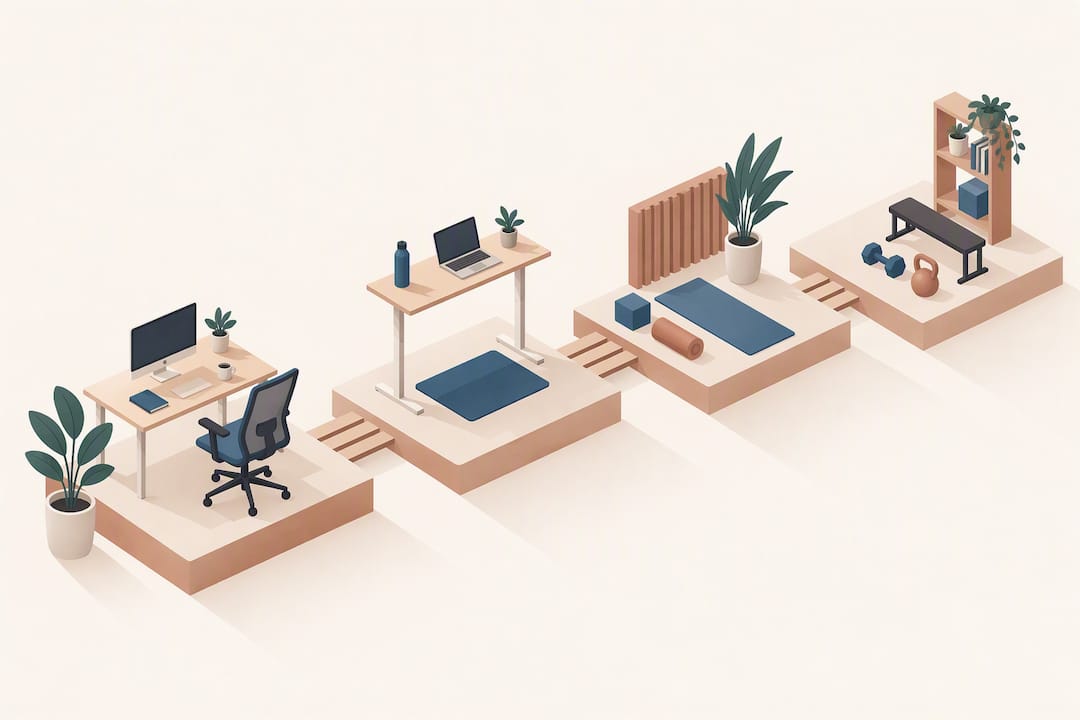
Do a short, 3 to 5 minute desk routine every 30 to 60 minutes and fix your workstation setup at the same time. Together, these two habits ease neck and shoulder tension and help you sit better without thinking about it. Stop any stretch that causes sharp pain. You will find the full quick routine in the next section, ready to copy into your day.
TL;DR:
- Regular short stretches every 30 minutes focus on neck, shoulders, and wrists to reduce tension and prevent strain, especially with controlled, slow movements.
- Adjusting your desk so the screen is at eye level, keyboard below elbow height, and supporting the lower back significantly improves posture and reduces discomfort.
- Building strength in neck, shoulder, and scapular muscles through targeted exercises offers more lasting relief than stretching alone, with consistency over several months.
- Modifying exercise range and resistance is essential for individual conditions, body size, and existing injuries to prevent aggravating pain or discomfort.
- Tying movement breaks to daily habits like calls or coffee refills helps establish consistency without relying on willpower, leading to better posture over time.
This sequence takes just a few minutes and uses nothing but your chair and desk. Move slowly, breathe normally throughout, and stop if you feel any pain.
Breathe out as you move into each stretch rather than holding your breath. This routine works best as a reset after a call, a meeting or a solid stretch of typing, and you can repeat the whole thing two or three times across a working day. Pair it with a short walk to the kettle or printer whenever possible, since changing your visual focus matters as much as changing your posture.
Good form matters more than how many reps you do. Here is how to do each move properly, along with common mistakes to avoid.
A common fault across all of these is rushing. Slow, controlled movement recruits the right muscles and avoids the jerking that can aggravate a sensitive joint. If chin tucks feel too easy, add light resistance by pressing your fingers against your forehead as you tuck. If a doorway chest stretch feels too strong, do it seated with arms wide instead.
Pro Tip: Do the neck and shoulder exercises first if you only have two minutes: they target the areas desk workers report tightening fastest.
Frequency matters more than duration. HSE guidance on display screen work recommends short, frequent breaks, for example short breaks totaling several minutes every hour, or shorter micro-breaks spaced more often, because these reduce fatigue and let you change posture before strain builds up. The NHS sitting exercises guide suggests holding stretches for around 5 to 10 seconds and repeating each one 3 to 5 times, a pattern that works well for most of the moves above.
Short, frequent breaks reduce fatigue and sitting time more reliably than occasional long ones, according to HSE workstation guidance, which also notes that break activities should differ from your main screen-based tasks.
Exercises help more when your workstation stops working against you. A few adjustments, checked once, keep paying off every day.
If your chair has no lumbar support, a rolled towel behind your lower back is a reasonable stand-in. For exact measurements by body height, clinicians’ ergonomic desk setup guidance breaks the numbers down further.
Stretching eases tightness, but it does not build the muscular capacity to hold good posture for hours. Trials reviewed by researchers at the University of Birmingham found that strengthening the neck, shoulder and scapular muscles reduced pain and disability in office workers more reliably than stretching alone, though the certainty of this evidence is still rated low to moderate.
Pro Tip: Treat desk stretches as first aid and strength training as the long-term fix; one relieves tension, the other prevents it from coming back.
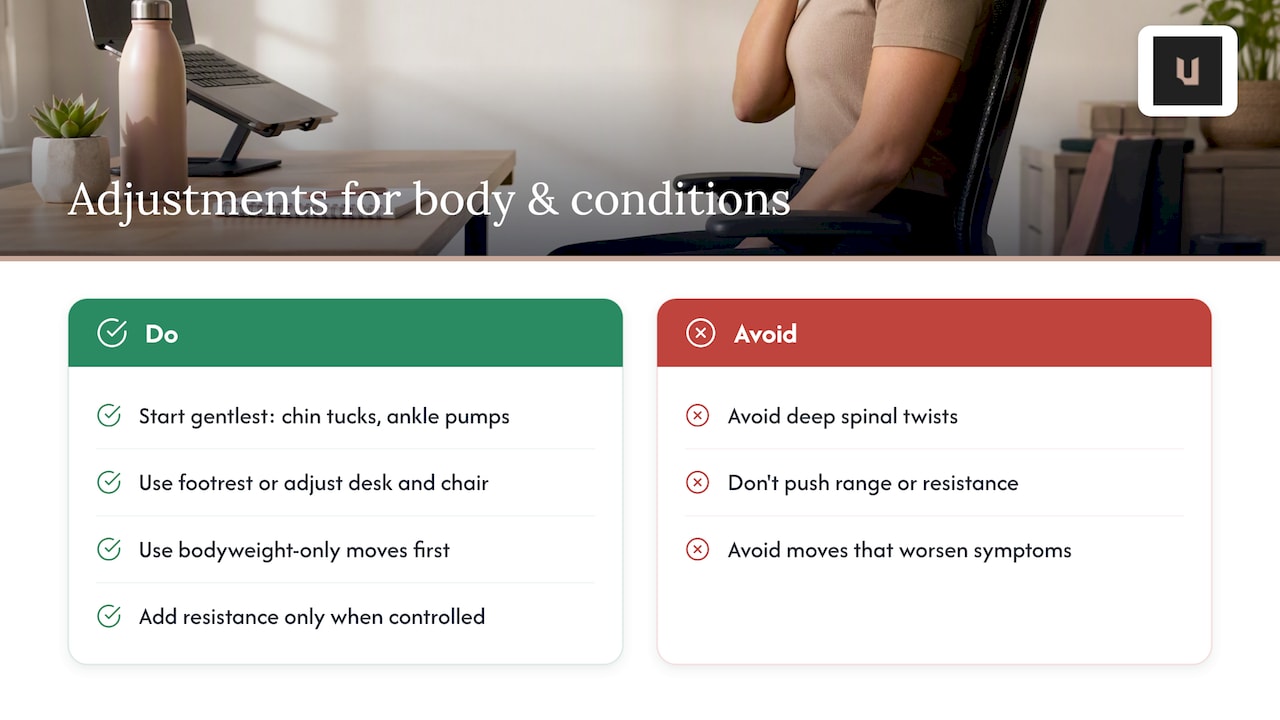
Desk exercises are not one-size-fits-all. Someone recovering from a shoulder injury needs a smaller range of motion than someone with no history of pain, and a taller or shorter person may need a different desk height entirely before any exercise makes sense.
If you have a diagnosed condition such as a disc problem, arthritis or a previous whiplash injury, start with the gentlest version of each stretch, chin tucks and ankle pumps rather than deep twists or doorway chest openers, and build up only if nothing worsens. Pregnant readers should avoid deep spinal twists and prioritise shoulder and wrist movements instead, checking with a midwife or GP if anything feels uncertain.
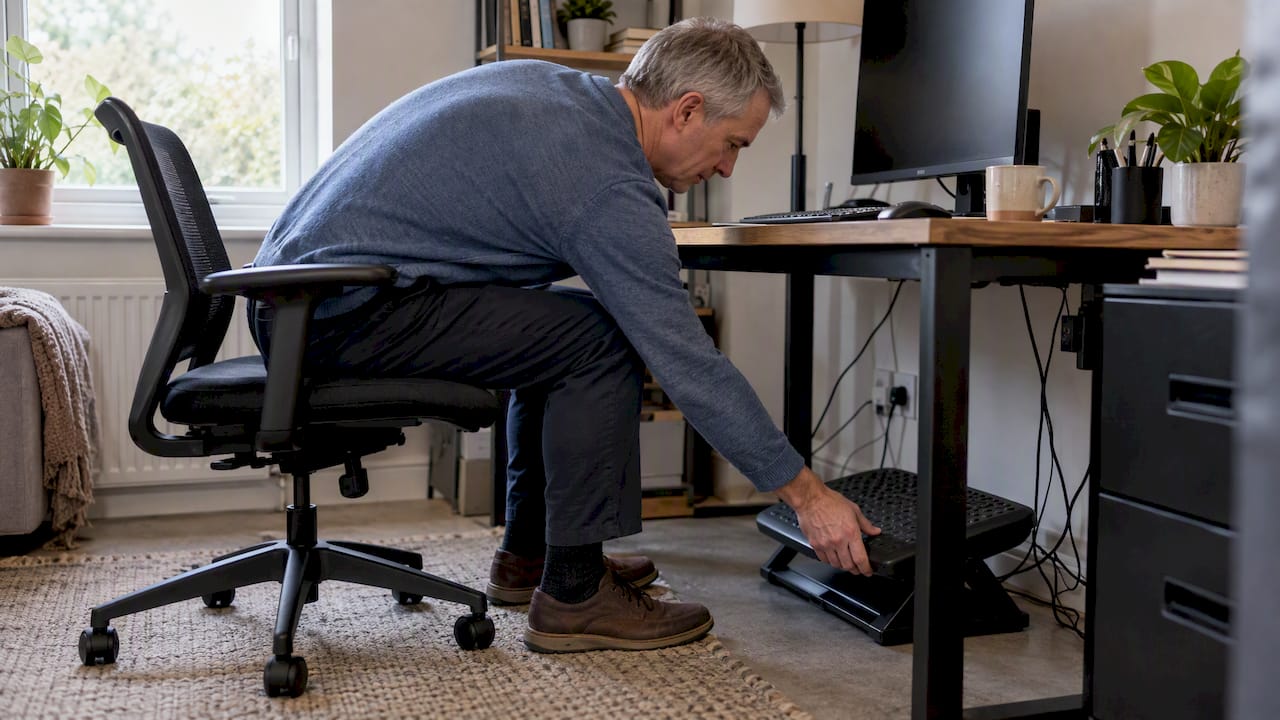
Body size and desk fit matter too. Taller people often find their knees jammed under a standard desk, which quietly encourages slouching to compensate, while shorter people frequently sit with feet dangling, which removes the ground support your lower back relies on. A footrest solves the second problem cheaply, and raising the desk or lowering the chair, with a footrest to match, solves the first.
Older adults or anyone with reduced grip strength may find towel or band resistance uncomfortable at first. Dropping to bodyweight-only versions of each move and adding resistance later is a sensible way in. The common thread across all of this is simple: adjust range and resistance to what feels controlled, never to what a generic list says you should manage.
Tie stretches to something you already do: the end of a call, a calendar alert, a coffee refill. That removes the need to remember. Expect eased tension within a couple of weeks, but real postural change, built through strength, takes a few months of consistency. Combine micro-breaks, a better desk setup and gradual strengthening rather than leaning on any one alone.
— Vitalij
Desk stretches and a better chair get you part of the way. For a structured, coached route to lasting strength and posture, Unit Health & Performance offers small group personal training with individualised plans, built around people who want proper progression rather than generic workouts.
Visit Unitperformance to check availability and book a session.
Adjust your screen to eye level, your keyboard just below elbow height, and your seat so your lower back is supported, then break up sitting with short stretches every 30 to 60 minutes. The HSE’s posture guidance covers the exact measurements to aim for.
You can meaningfully improve long-standing poor posture, though it takes weeks for tension to ease and months of consistent strengthening for lasting change. Combining regular movement breaks with targeted strength work, rather than stretching alone, gives the most reliable results according to research reviewed by the University of Birmingham.
Common signs include a forward-leaning head, rounded shoulders, an arched or flattened lower back when seated, and tightness or stiffness in the neck and upper back after sitting. These often build up gradually rather than appearing suddenly, which is why regular desk breaks matter.
Chin tucks, shoulder rolls, a seated or doorway chest stretch, seated spinal twists, wrist stretches and calf raises cover the main areas that tighten from sitting. The NHS sitting exercises guide suggests holding each for 5 to 10 seconds and repeating 3 to 5 times.