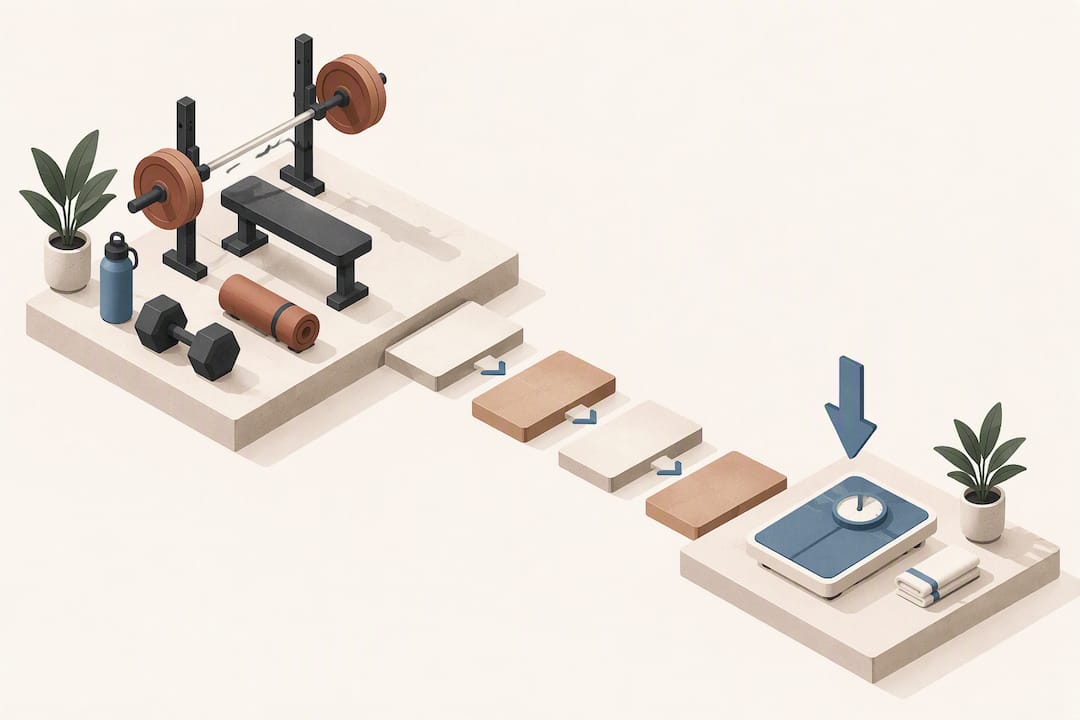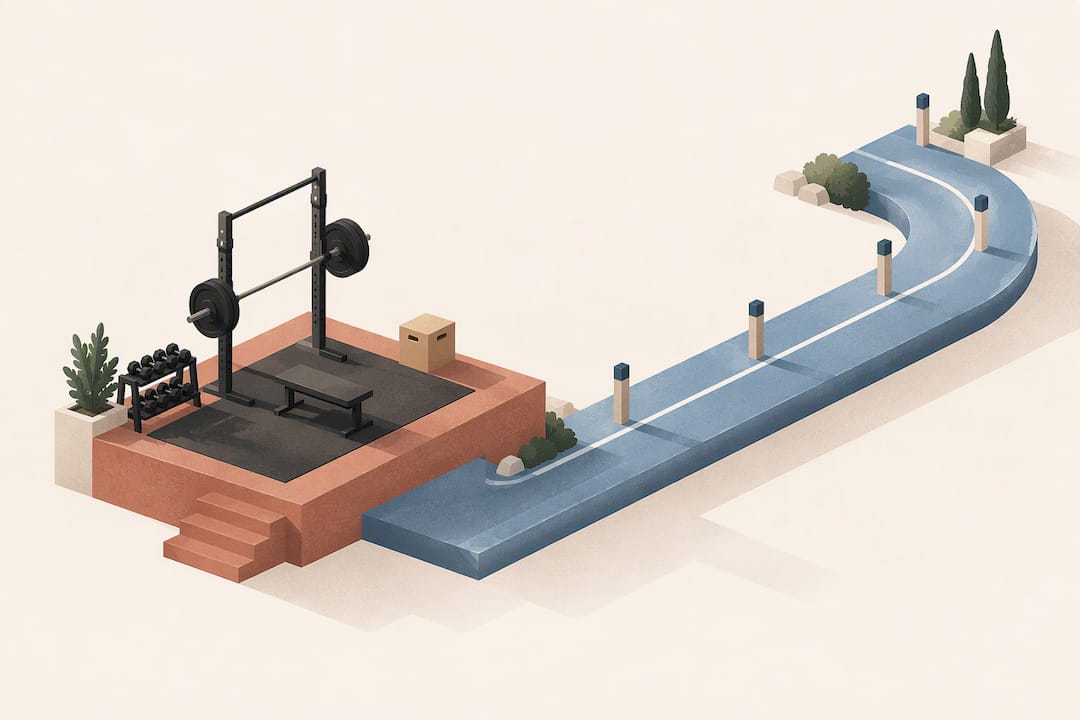
The core prescription for training for longevity combines strength work twice a week, balance and functional practice twice a week, 150 minutes of moderate cardio (or 75 vigorous), and an occasional higher-intensity or power session. This pattern is linked to lower all-cause mortality, fewer falls and better independence in later life. Start this week with one 20 to 30 minute session: a few squats, a short walk and a single-leg balance drill.
TL;DR:
- Resistance and aerobic training together can reduce all-cause mortality risk by up to 40%, especially when resistance work is prioritized for over-40 adults.
- Weekly goals include at least 150 minutes of moderate cardio and two strength and balance sessions, with progression structured through beginner, intermediate, and advanced microcycles.
- Simple exercises like sit-to-stands, wall push-ups, balance drills, and brisk walks can be progressively scaled to maintain safety and effectiveness without gym equipment.
- Before increasing intensity, individuals should check for symptoms like chest pain or dizziness, and only progress one variable at a time while tracking function tests monthly.
- The key to long-term adherence is building community support through consistent scheduled sessions with familiar groups to sustain motivation.
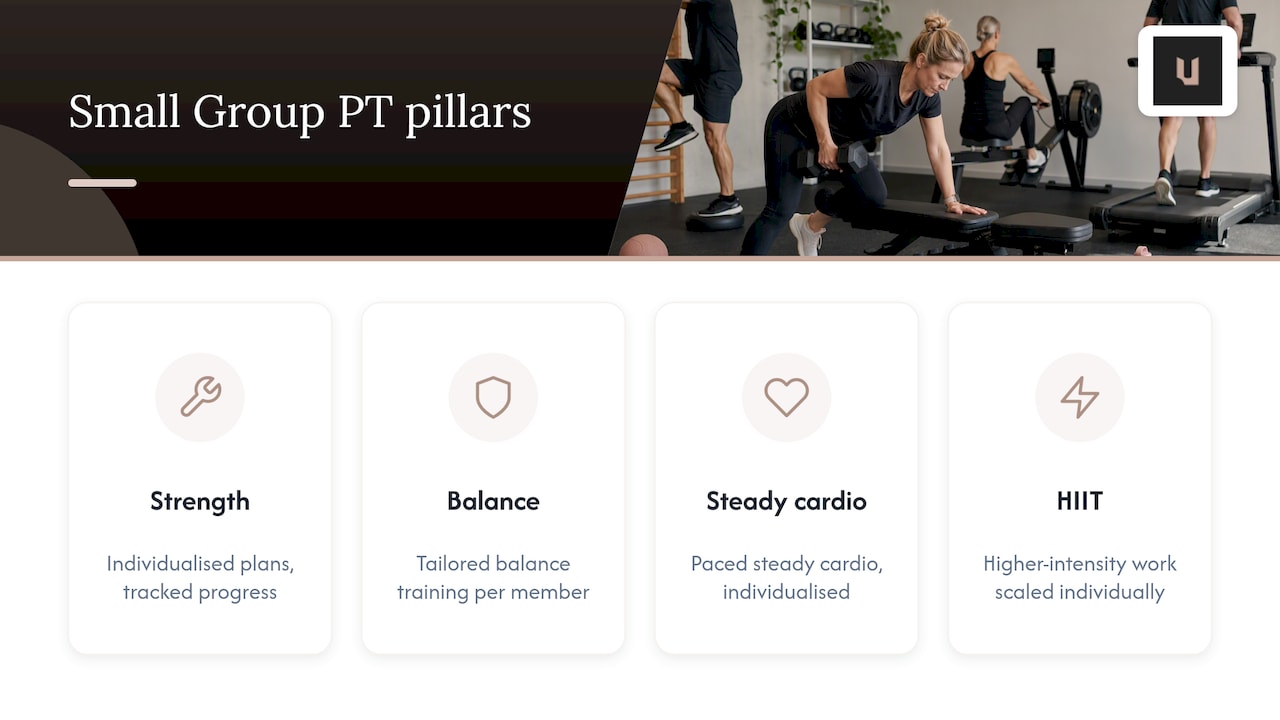
Longevity training rests on four pillars, and each does a different job.
The UK Chief Medical Officers’ physical activity guidelines recommend at least 150 minutes of moderate aerobic activity weekly, plus strength, balance and flexibility work on at least two days, to maintain independence into later life. A large meta-analysis of resistance training and mortality found that combining resistance and aerobic training was linked to up to a 40% lower all-cause mortality risk compared with no exercise, with resistance training alone associated with around a 21% reduction.
If you are new to training, frail, or returning after injury, prioritise stability and strength before adding harder cardio. If you already walk or cycle regularly, add two strength sessions first: the evidence base for resistance training’s effect on function and mortality is the strongest single lever available to most adults over 40.
The weekly target of 150 minutes of moderate cardio (or 75 minutes vigorous, or a mix) sits alongside, not instead of, your strength and balance sessions. A short walk counts towards the cardio total; a strength session does not, even though it raises your heart rate.
Combine components within a single session when time is tight: a strength session can open with five minutes of balance drills and close with a brisk ten-minute walk. Leave at least one full rest day weekly, and avoid stacking two hard sessions back to back. Increase frequency only once a week’s load feels comfortably manageable for two consecutive weeks.
You do not need a gym full of equipment to cover all four pillars. A simple progression ladder works for most people.
Evidence on power training for older adults suggests that fast, controlled movements such as a quick sit-to-stand or step-up target the force production older adults lose fastest, often improving everyday tasks like rising from a chair more rapidly than slow strength work alone.
Pro Tip: Log your rate of perceived exertion (RPE) out of 10 after each session, and aim to keep most strength sets two to three reps short of failure (reps in reserve); a simple weekly note of sets, reps and RPE shows progress even without a gym log.
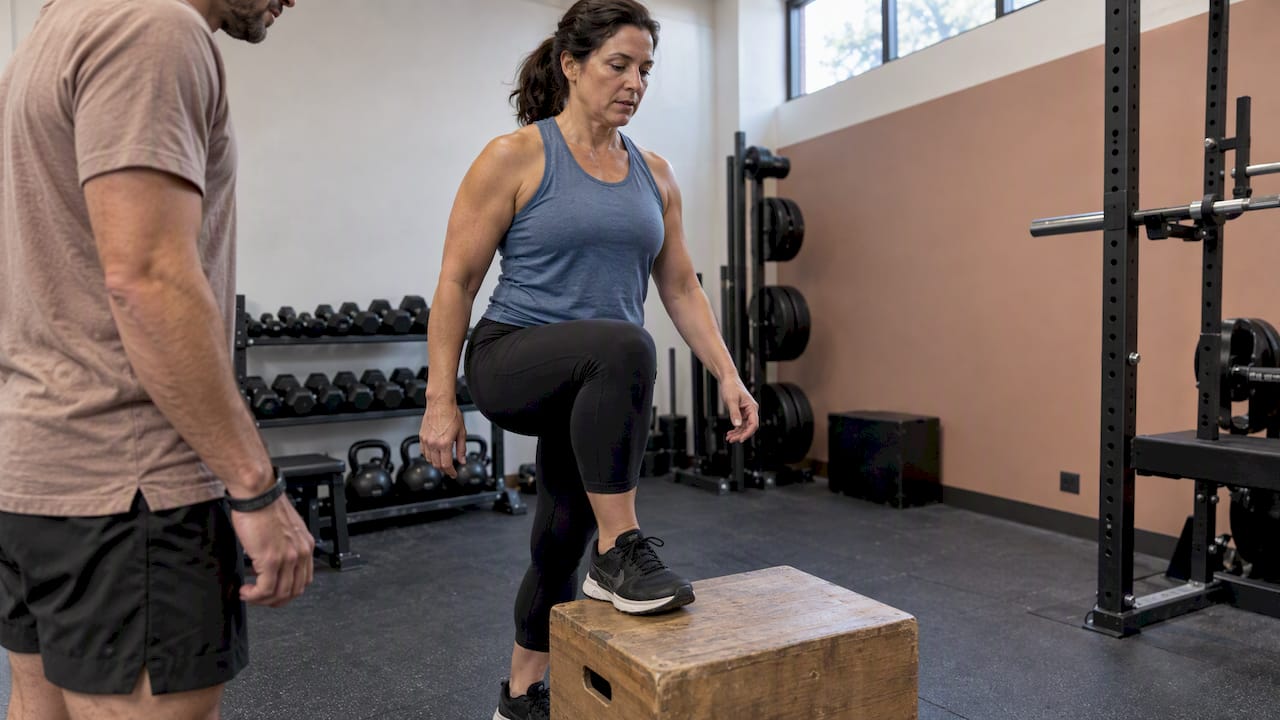
Before increasing load or intensity, run a quick check: are you free from chest pain, unexplained breathlessness, joint swelling or dizziness? If any of these appear during or after exercise, pause and seek a professional review rather than pushing through.
Resistance training programmes of eight weeks or longer have been shown to improve handgrip strength, gait speed and postural stability in older adults, giving a concrete benchmark for how quickly consistent training can shift these test results.
We built Small Group PT around exactly this four-pillar structure, individualising strength, balance, steady cardio and higher-intensity work to each member’s starting point rather than running everyone through the same session, supported by personalized workout plans and smart training. Many members have completed tracked workouts, with many reporting steady strength gains and weight loss as sessions accumulate week on week. A small group training format lets us adjust load and balance progressions individually while keeping the coaching and accountability of a group. If you want to see how this works in practice, a trial session or initial assessment is the simplest first step.
The hardest part of training for longevity is rarely the exercise itself: it is staying consistent once motivation dips. Coaching people through that stretch, the pattern I notice most is that community keeps people showing up long after willpower runs out. If you want this to stick, book the same sessions each week with the same people, so missing one feels like letting someone down, not just skipping a workout.
— Vitalij
If you would rather follow this framework with coaching than build it alone, our Small Group PT sessions cover strength, balance and cardio within a small, supported group, with plans adjusted to your own starting point and any injury history. For those who prefer a drop-in structure, our fitness classes, conditioning and hybrid options offer the same four pillars in a class format. Most newcomers start with a short assessment so we can see where your strength, balance and cardio sit now, then join a trial session to feel how the coaching works before committing. From there, consistent attendance is what tends to produce the steady strength and function gains members report. You can check availability and book a first session through our Small Group Personal Training in Sheffield page.
The best approach combines strength training twice weekly, balance and functional work twice weekly, and 150 minutes of moderate cardio or 75 minutes vigorous, following the UK CMO guidelines. Adding an occasional higher-intensity or power session rounds out the four pillars of stability, strength, steady cardio and sprint work.
There is no single recognised “3-3-3 rule” in the research or official guidance behind training for longevity; definitions vary informally between trainers and apps. The evidence-backed structure covered in this article (strength and balance twice weekly plus a weekly cardio target) is a more reliable framework to follow.
The four practical pillars are stability (balance and functional movement), strength (resistance training), steady cardio (lower-intensity aerobic work) and sprint or power work (brief higher-intensity efforts). Government and research guidance consistently points to combining these rather than relying on one alone.
Useful staples include the sit-to-stand or squat, a push movement such as a press-up, a pull movement such as a row, a single-leg balance drill, and brisk walking or cycling for steady cardio. Each can be progressed in difficulty as strength and balance improve, as outlined in the exercises and progression section above.
Guidance points to at least 150 minutes of moderate aerobic activity (or 75 minutes vigorous) plus strength and balance training on at least two days, according to NHS guidance for older adults. Short, frequent bouts count towards this total, so regularity matters more than any single long session.