Progressive overload means gradually asking your muscles to do slightly more over time, and the one move to make now is a simple twice-weekly resistance routine where you raise just one thing at a time. The American College of Sports Medicine and the NHS back this approach, and we coach it at Unit Health & Performance.
TL;DR:
- Start with 1–3 sets of 8–15 repetitions per muscle group, and leave at least 48 hours before training those muscles again; allow 72 if tired.
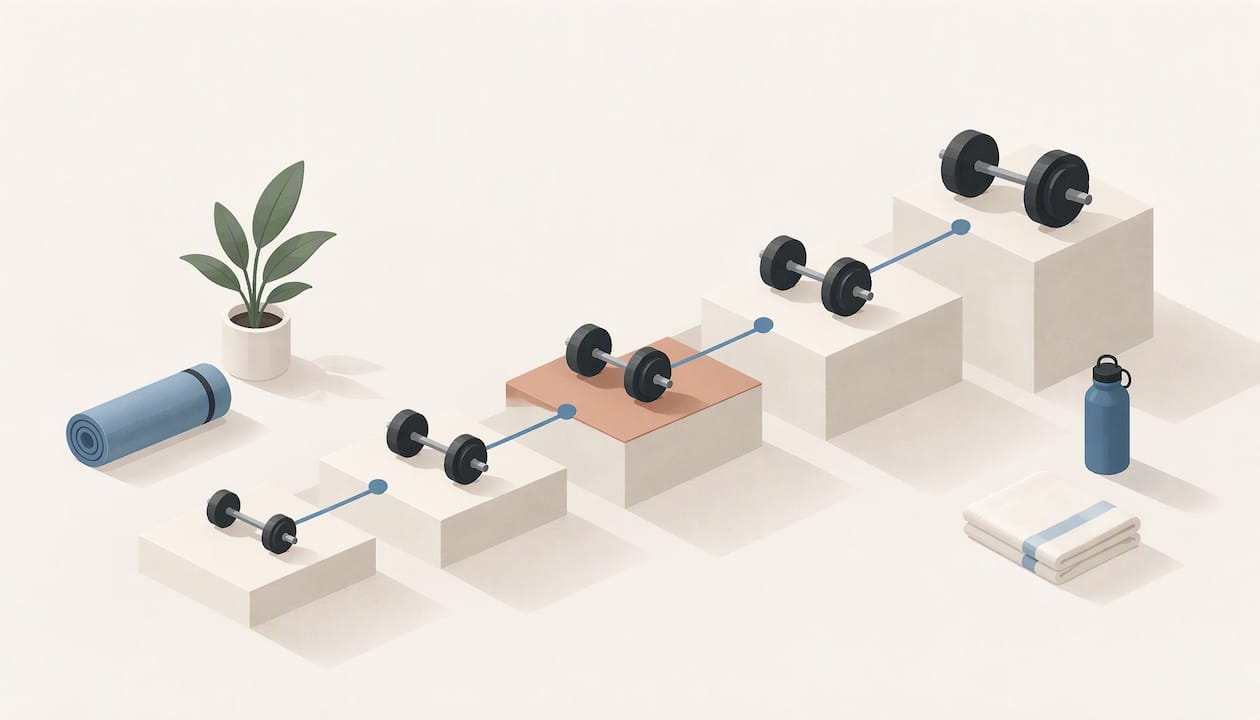
- Once you reach the top of your rep range for two sessions, increase resistance by 2–10%, then return to the lower end of the range.
- An eight week plan can use four to six full body exercises, progressing from one set of 8–10 reps to two sets of 12–15.
- Bodyweight and resistance band routines can build strength and function; if an exercise hurts or feels awkward, substitute a similar movement rather than forcing it.
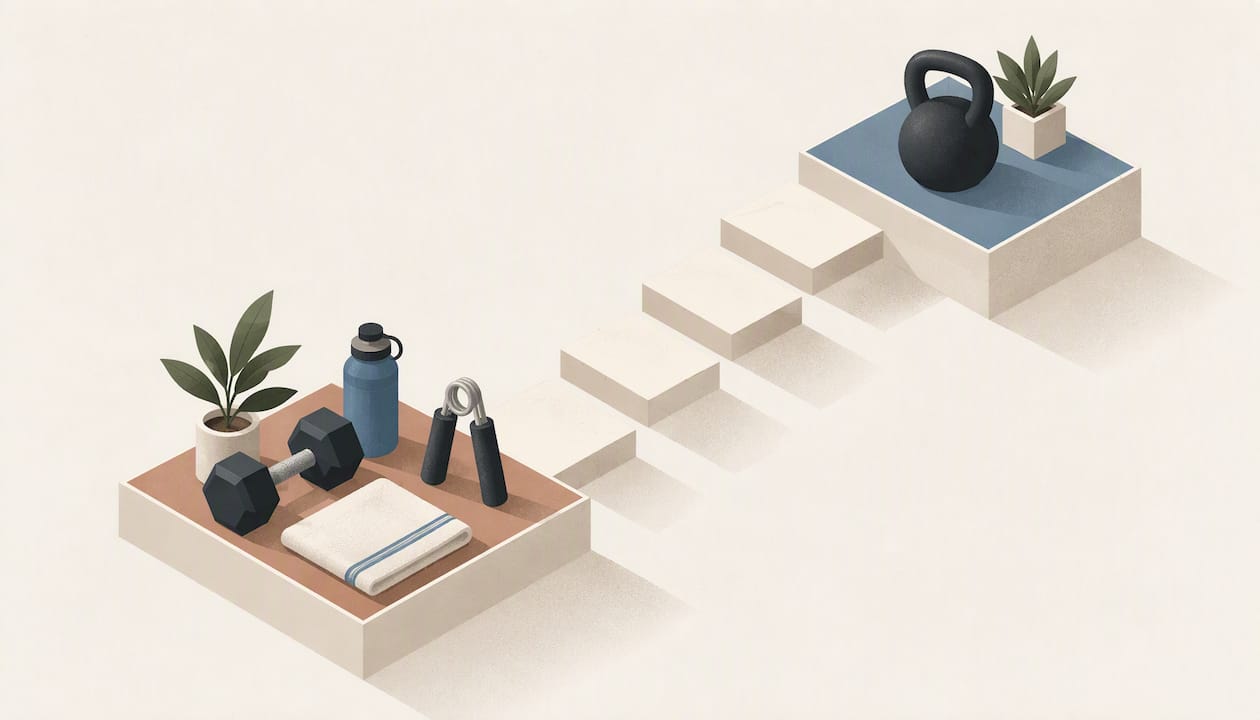
Your muscles adapt to the demands you place on them. Lift a weight that feels a bit hard, recover, and your body gets stronger so that weight feels easier next time. Progressive overload simply means nudging the demand up again, so the body keeps having a reason to adapt.
For a beginner, the good news is that you do not need a clever plan. The 2026 ACSM guidance says the largest jump in fitness results comes from moving from no resistance training to any consistent programme. Starting is the big win.
The largest jump in fitness results occurs when moving from no resistance training to any consistent programme. In other words, turning up regularly matters more than chasing a perfect routine.
Both ACSM and the NHS advise training all major muscle groups at least twice a week. A 2026 ACSM position stand reviewing the research also found that all reasonable resistance training prescriptions beat doing no exercise at all. So pick a plan you can repeat, and let the progress build from there.
Think of these as levers. You only need to pull one at a time.
A sensible beginner starting point from the NHS is 1–3 sets of 8–15 repetitions per muscle group.
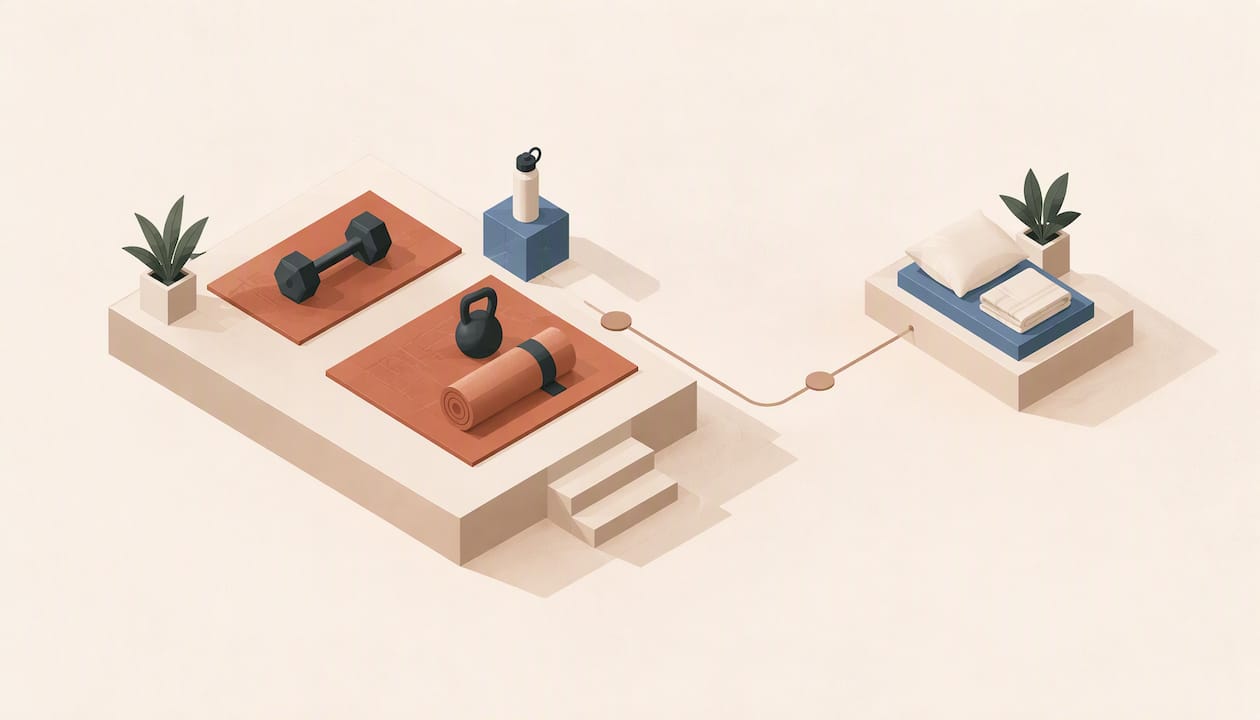
Leave at least 48 hours between sessions that train the same muscles, and allow up to 72 if you still feel tired. That gap is when your body actually rebuilds.
Pro Tip: Write down your weight, sets and reps after every session. If you cannot see last week’s numbers, you cannot beat them.
The golden rule is to change one variable at a time. If you add weight, sets and speed in the same week, you will not know what worked, and you raise your chance of getting sore or hurt. The NHS Right Decisions guidance agrees: change only one variable at a time to give your body time to adapt.
Here is how that looks in practice. For a squat, go from a chair sit-to-stand, to a bodyweight squat, to a squat holding a dumbbell. For a push, move from a wall press-up, to a box press-up, to a floor press-up. For a pull or hinge, use a resistance band row or a dumbbell row, then a thicker band or heavier dumbbell.
Train twice a week on non-consecutive days, doing the same full-body session each time. Pick 4–6 exercises, mostly compound moves that work several muscles at once.
Weeks 1–2: do 1 set of 8–10 reps and focus on clean technique. Weeks 3–4: build to 2 sets of 10–12 reps. Weeks 5–6: aim for 2 sets of 12–15 reps.
At home, use bands and bodyweight. At a gym, swap in dumbbells or a barbell. Home-based routines with bands and bodyweight exercises are effective for improving strength and physical function, so you can start wherever you are. If an exercise hurts or feels awkward, swap it for a similar movement, like a goblet squat for a barbell squat.

Pro Tip: If a week goes badly, repeat it rather than skipping ahead. Repeating a week is still progress.
Some muscle soreness is normal. Physiotherapy guidance notes that soreness can last up to 48 hours after a session, and that excessive or prolonged pain suggests you have overdone it and should cut your volume or intensity next time. Mastering the movement and progressing slowly lowers your risk of injury or burnout.
If you are over 40, the same rules apply, but give yourself a little more recovery and progress in smaller steps. Strength training and walking do different jobs, and cardio alone does not replace strength work, so keep both in your week. If you want gentle examples, our guide to low-impact strength training for 40+ shows easier swaps.
Most beginners overthink the plan. In our experience, the best programme is the one you will actually do, and Dr Stuart M. Phillips makes the same point in the ACSM guidance: sticking with it matters more than complexity.
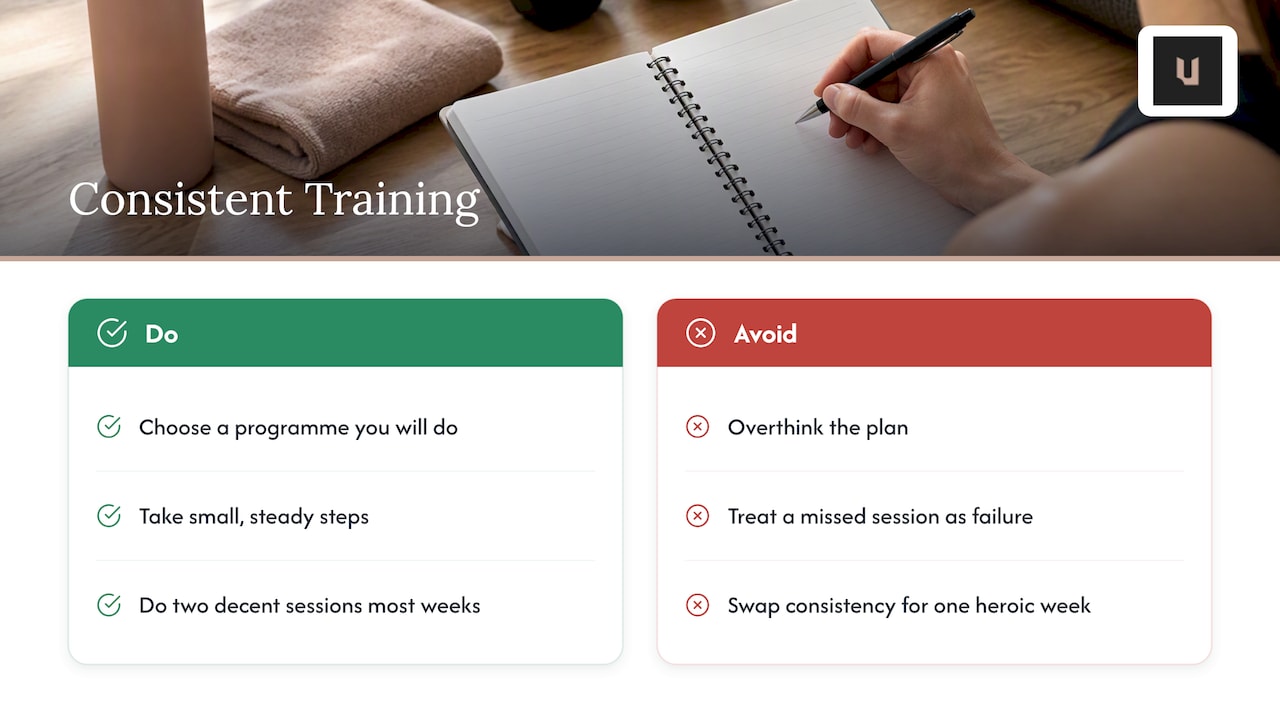
Small, steady steps win. One extra rep, a slightly slower lowering phase, or a tiny bump in weight adds up over time, and it fits around work, family and a busy week. Missing a session is not a failure. Doing two decent sessions most weeks beats one heroic week followed by a month off.
If you like guidance, coached small-group sessions are a good way to have someone else decide when to progress. Our article on twice-weekly strength training over 40 shows how little time this can take.
— Vitalij
Knowing the rules is one thing. Applying them with someone watching your form is another. At our Sheffield gym, we turn progressive overload into a plan built around you, so every session has a clear purpose.
Ready to start? Send us an enquiry through our Small Group PT page and we will help you take your first step.
Yes. It gives your body a reason to keep getting stronger, and for beginners it can be as simple as adding a rep or a small amount of weight. Guidance from ACSM says the biggest gains come from starting a consistent resistance programme.
Aim to train all major muscle groups at least twice a week, as both ACSM and the NHS advise. Leave at least 48 hours between sessions for the same muscles so they can recover.
Add weight once you can reach the top of your rep range for two sessions in a row. The NHS suggests increasing resistance by 2–10% at that point.
Yes. Resistance bands and bodyweight exercises work well for building strength and physical function, and you can progress them by adding reps, slowing the tempo or moving to a harder variation.
No. A short full-body routine done twice a week, with one small change at a time, is plenty. Consistency matters more than variety or fancy techniques when you are starting out.