Yes, strength training after 40 is safe and effective, and the best time to start is now. Begin with two guided full-body sessions a week that hit all the major muscle groups, using weights you can control for 8 to 12 reps. Prioritise consistency and recovery over how much you can lift, and the results follow.
TL;DR:
- Strength training twice a week with 8 to 12 reps per exercise effectively counters muscle and bone loss after 40, supporting independence and metabolic health.
- Progressive overload should be gradual, with attention to control and joint-friendly variations, avoiding maximum loads and training to failure to prevent injury.
- Combining compound movements like squats, deadlifts, and presses with mobility work and proper warm-up optimizes safety and results for older adults.
- Recovery and consistency, including deload weeks and spacing sessions at least 48 hours apart, are crucial for sustainable progress and injury prevention.
- Small group coaching provides individualized form correction, load progression, and accountability, making sustained strength training more accessible and effective after 40.
Muscle mass starts dropping off in your 30s, and the decline speeds up through your 40s and beyond. Left unchecked, this loss of muscle (known clinically as sarcopenia) doesn’t just mean weaker arms. It means struggling to get out of a low chair, carry shopping up stairs, or catch yourself if you trip.
Strength training reverses that trend, not just slows it. Lifting weights, or working against resistance in any form, tells your body to hold onto muscle and rebuild it. This matters for far more than aesthetics.
Bone density follows a similar downward curve after 40, particularly for women approaching or through menopause. Resistance training puts mechanical stress on bone that signals it to stay dense, and evidence reviews from the UK CMO expert working group show that programmes combining progressive resistance work with balance training, done at least twice a week, cut the risk of falls and support both bone and muscle health right through midlife and beyond.
The knock-on effects reach further than most people expect:
None of this requires becoming a competitive lifter. It requires showing up, twice a week, with a sensible plan.
Twice a week is the minimum that actually moves the needle, and it’s backed by official guidance rather than gym folklore. The UK Chief Medical Officers’ physical activity guidelines recommend muscle-strengthening activity that works your legs, hips, back, abdomen, chest, shoulders and arms on at least two days a week, alongside 150 minutes of moderate aerobic activity across the week.
In numbers: The CMO guidelines set two days a week of full-body strength work as the baseline for adults of every age, paired with 150 minutes of moderate aerobic activity weekly. That’s the floor, not the ceiling.
You don’t need to live in the gym to hit this. NHS guidance suggests aiming for 8 to 12 repetitions per exercise, with 2 to 3 sets per movement, and notes that a full session covering the major muscle groups can take less than 20 minutes.
Here’s how that breaks down practically:
Fit these sessions around your week rather than forcing your week around them. A Tuesday and Friday slot, or Monday and Thursday, gives your muscles enough recovery time between sessions while keeping the habit consistent. Consistency over months beats intensity over weeks every time.
The single biggest mistake people make when they start strength training over 40 is treating it like they did at 25: chase the heaviest weight possible, push to failure, and see how sore they can get. That approach causes more setbacks than gains.
1. Manage volume, not maximum loads. NHS guidance on strength and weight training at home recommends prioritising moderate loads and quality repetitions, building total weekly volume gradually, rather than regularly attempting maximal single-rep lifts. Your tendons and joints adapt more slowly than your muscles do, so pushing for a new personal best every few weeks puts stress on tissue that hasn’t caught up yet.
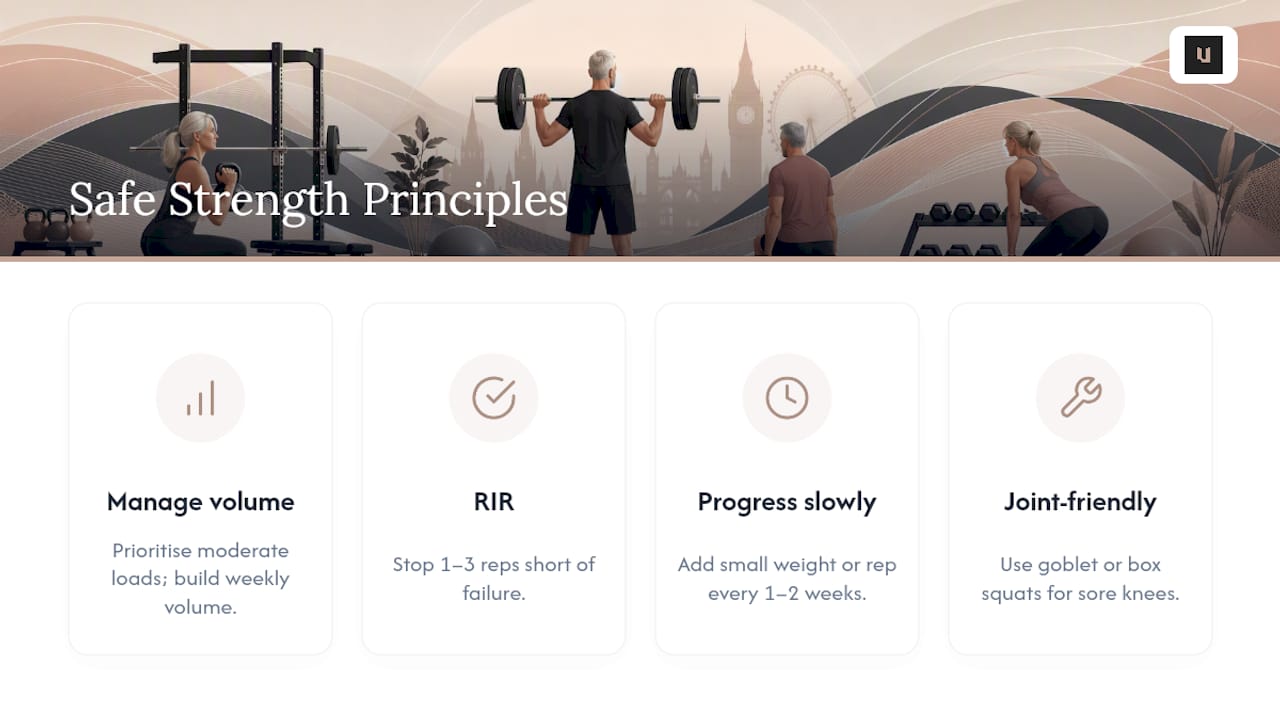
2. Leave reps in reserve. Most work sets should stop one to three reps short of failure. If you can’t say with confidence you had another rep left in the tank, the weight was too heavy for that set. This concept, often shortened to RIR (reps in reserve), keeps you training hard without grinding your joints down session after session.
3. Ramp up gradually and prioritise control. Start with a weight you can move through the full range of motion for 8 controlled reps, then build from there over several weeks. Jerky, rushed reps under load are where most strains happen, not from the weight itself but from losing control of it.
4. Choose joint-friendly variations when needed. A sore knee doesn’t mean you skip lower body work entirely. It means you switch a barbell back squat for a goblet squat or a box squat, movements that load the same muscles with less joint stress.
Pro Tip: If you wake up the day after training barely able to move, that’s not a sign the session “worked”. Severe soreness usually means you spiked volume or intensity too fast. Aim for sessions you could repeat again in 48 hours, not ones that flatten you for a week.
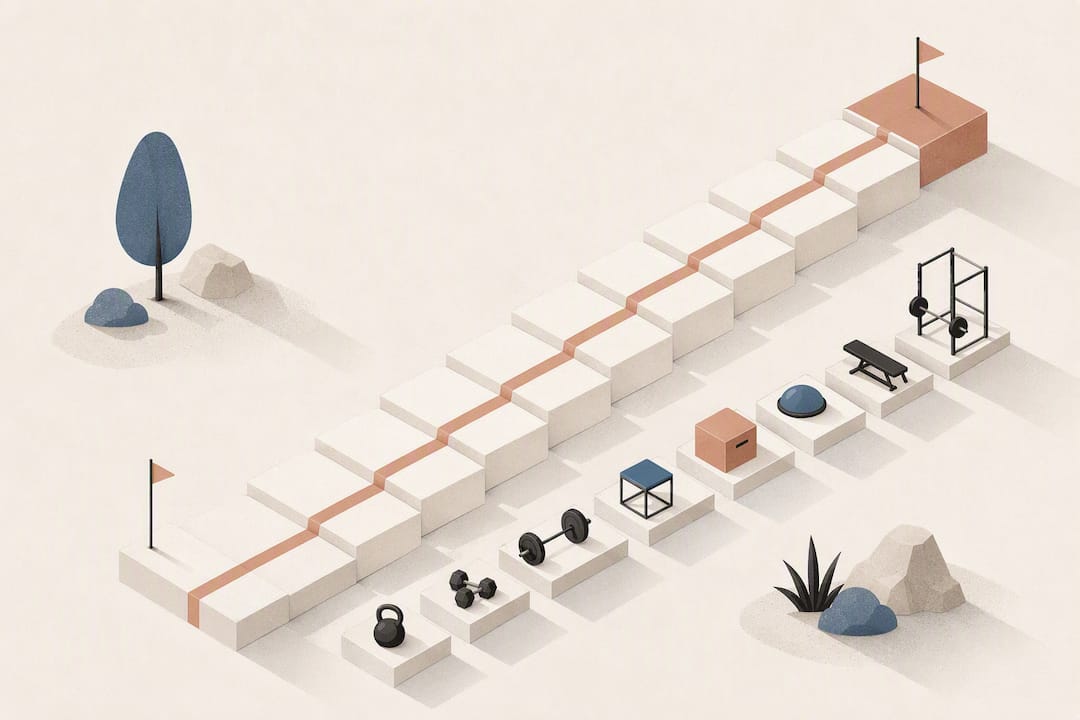
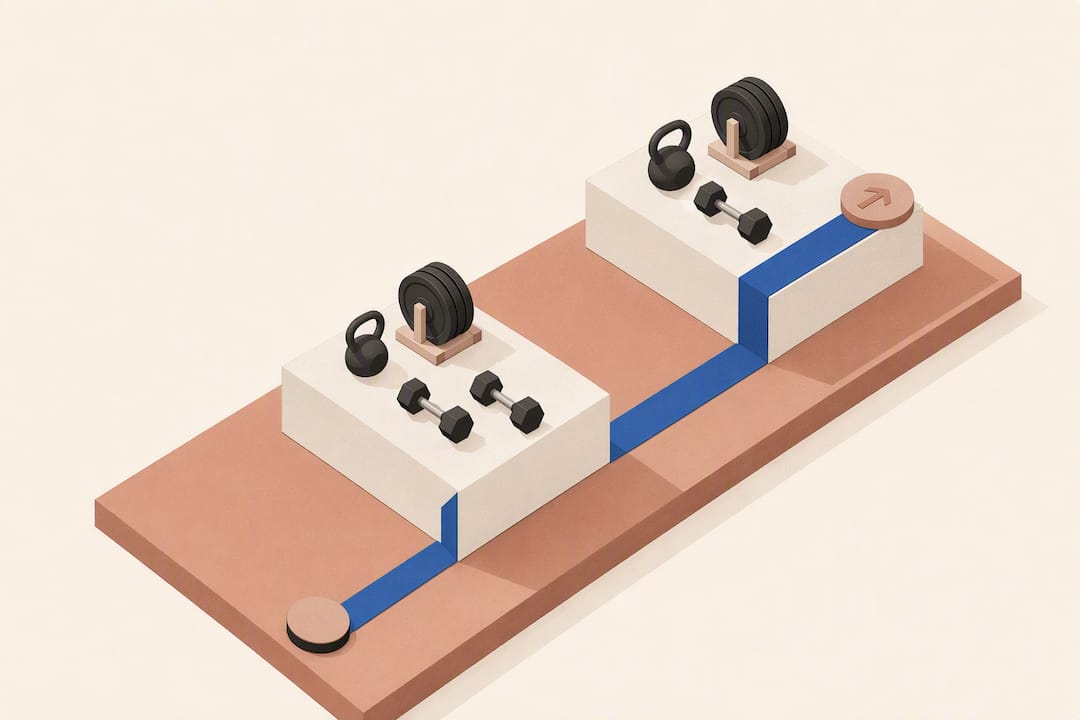
Progression should feel almost boring in its steadiness. Add a small amount of weight, or an extra rep, every one to two weeks, not every session. That slow curve is exactly what keeps you training in six months, when the people who went too hard in week one have already quit through injury or burnout.
You don’t need a complicated plan. You need one you’ll actually repeat. Below are two templates, depending on where you’re starting from.
1. Beginner: two sessions a week, full body
Each session covers the whole body, so you get the muscle-strengthening frequency the CMO guidelines call for without needing four or five gym visits a week. For practical beginner programming and progression principles, see Beginner-Friendly Strength Training: Start Strong.
Rest 60 to 90 seconds between sets. Progress by adding one rep per set every week or two until you reach the top of the range, then add a small amount of weight and drop back to 8 reps.
2. Intermediate: three sessions a week, upper/lower split
Once full-body sessions feel comfortable and your technique is solid, splitting the week gives each muscle group more focused volume.
3. An 8-week progression outline
This structure mirrors the approach used in strength training classes across Sheffield, where sessions are built around this same steady build-and-deload rhythm rather than random hard days.
Compound movements, exercises that work several muscle groups and joints at once, give you the most return for the time you put in. They also mirror movements you already use in daily life, which is exactly why they matter more as you get older.
Bands and machines aren’t a lesser option, they’re a smart entry point. If a dumbbell row aggravates your lower back, a band row or chest-supported machine row lets you train the same muscles with less spinal load. As strength and confidence build, you can progress from a light band to a heavier one, then to dumbbells, then to a barbell if that’s where your goals lead.
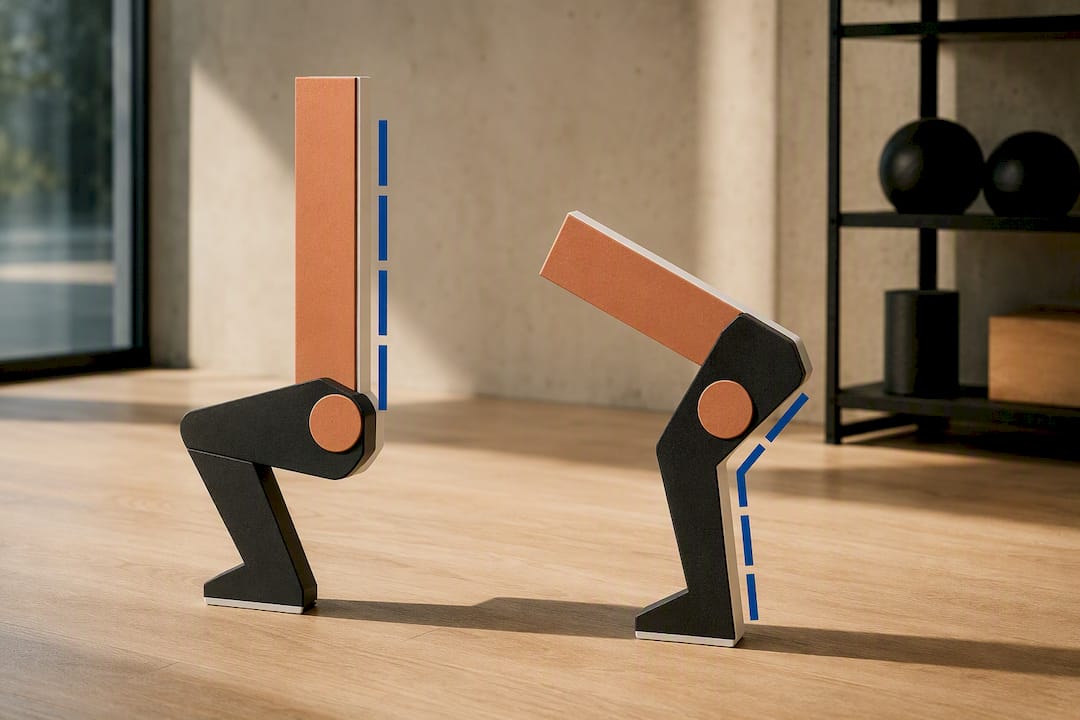
Technique cues matter more than intensity at this stage: keep your ribcage stacked over your hips during squats, keep the bar or dumbbell close to your shins during a hinge, and never sacrifice range of motion for extra weight. If a movement consistently causes pain rather than normal muscle fatigue, that’s the signal to get a coach’s eyes on your form rather than pushing through.
A rushed warm-up is one of the most common causes of niggling injuries in older lifters, and it’s the easiest thing to fix.
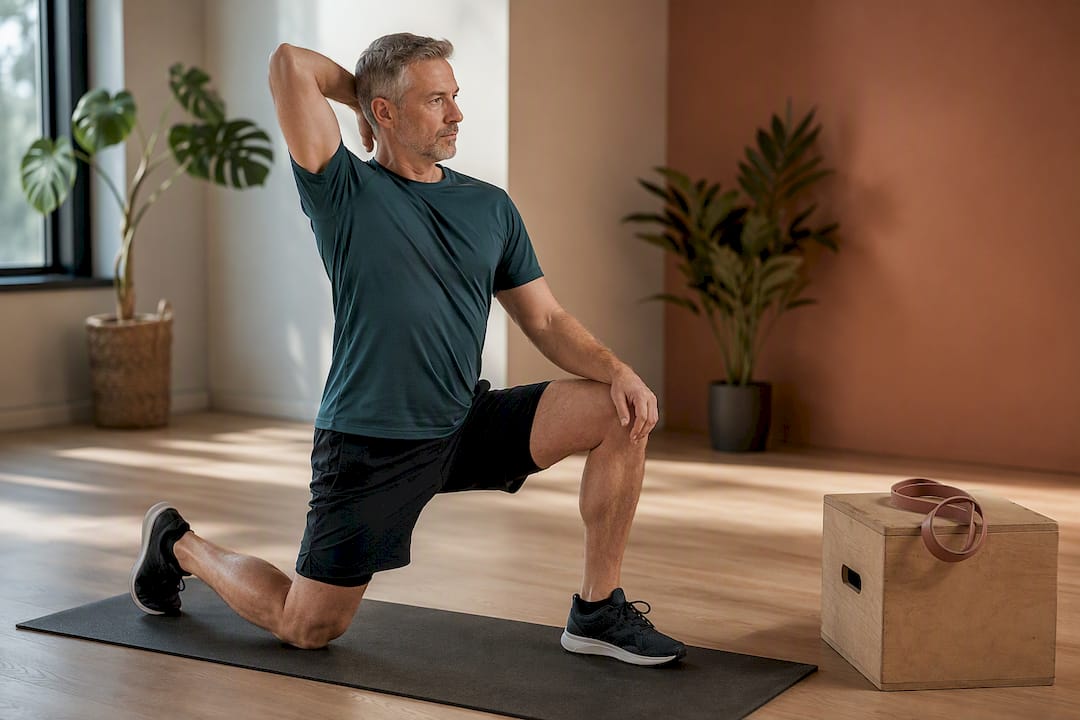
Spend 3 to 5 minutes on general movement first: brisk walking, cycling, or rowing to raise your heart rate and body temperature. Follow that with movement rehearsal, doing the exact exercises you’re about to train, but with an empty bar or light dumbbells, before ramping up to your working weight. This primes both your joints and your nervous system for the load ahead, according to NHS guidance on strength training at home.
For common restrictions, add these into your warm-up rather than treating them as separate sessions:
Recovery matters as much as the session itself. Space full-body sessions at least 48 hours apart so muscles have time to rebuild, and build in a deload week every six to eight weeks where you deliberately train lighter. Sleep and stress management belong in the same conversation as sets and reps: poor sleep blunts strength gains regardless of how well-designed your programme is.
Pro Tip: If a joint feels stiff rather than sore the next day, that’s usually a mobility gap, not a strength problem. A few extra minutes of targeted mobility work in your warm-up solves it faster than more time under the bar.
Protein needs rise as you age, because muscle becomes less responsive to the same intake that worked fine in your 20s and 30s. Most guidance for adults over 40 who are strength training points toward spreading protein across the day rather than loading it all into one meal.
In numbers: NHS guidance on strength training recommends structuring sessions around 8 to 12 reps for 2 to 3 sets, and that same steady, incremental approach applies to nutrition. Small, consistent habits beat drastic short-term changes.
Practical targets to work towards:
None of this needs to be complicated. A meal built around a palm-sized portion of protein, some carbohydrate, and vegetables covers most of what your muscles need to recover and grow.
Not fundamentally, but they do change how you apply it.
Menopause. Hot flushes and disrupted sleep can make a hard session feel harder than it is. Managing volume rather than pushing through, keeping the training space cool, and staying consistent with lighter sessions rather than skipping when energy dips tends to work better than an all-or-nothing approach.
Joint pain or old injuries. Graded exposure, gradually reintroducing load to a joint through a full but pain-free range of motion, usually works better than avoiding movement altogether. A goblet squat instead of a barbell back squat, or a trap bar deadlift instead of a conventional one, often solves the problem without cutting the movement pattern entirely. If pain persists beyond normal muscle fatigue, see a physiotherapist or GP before pushing further.
Limited time. The UK CMO guidelines note that everyday activities, heavy gardening, carrying shopping, climbing stairs with load, count towards muscle-strengthening targets if they genuinely challenge the muscle. It’s not a replacement for structured training, but it means a missed gym session isn’t wasted if your day involved real physical effort.
For anyone managing frailty, a fracture history, or higher fall risk, evidence reviews show that supervised, progressive programmes followed consistently for six months or more are both safe and effective at reducing falls and improving physical function. That’s a strong case for training with a coach rather than guessing alone, particularly in the first few months.
Everything covered so far, volume management, gradual progression, movement modifications, works better with an extra set of eyes watching your form. That’s the gap small group personal training is built to close.
At UNIT Health & Performance in Sheffield, sessions are built around individualised plans rather than a generic class everyone follows regardless of ability. Coaches track load progression for each member, adjust exercises around joint restrictions or old injuries, and keep group numbers small enough to actually notice when someone’s form is slipping or their reps in reserve have run out.

That structure matters most for the exact group this article is written for: adults over 40 who want the benefits of strength training without guessing at safe progression alone. The community element helps with the part that often gets overlooked in a programme on paper, showing up consistently, week after week, because other people expect you there too.
The biggest misconception about strength training after 40 is that it’s a race against decline, something you need to fix urgently before it’s too late. It isn’t. It’s maintenance, and maintenance rewards patience far more than intensity.
The people who stay strong into their 60s and 70s aren’t the ones who trained hardest in any single month. They’re the ones who kept two sessions a week going for years, adjusted when their joints complained, and treated a deload week as progress rather than failure. Coaching and community help enormously here, not because the exercises are complicated, but because accountability keeps you showing up on the weeks motivation runs low.
Start where you are. Add load slowly. Expect this to take years, not weeks, and you’ll actually get there.
— Vitalij
Reading a programme on paper and having someone watch your squat depth in real time are two different experiences, and the second one is where most people actually see progress stick. Small group personal training gives you that middle ground between a generic class and one-to-one coaching: individualised plans, load progression tracked session by session, and a small enough group that a coach notices if your form drifts or you’re grinding through reps that should have stopped two short of failure.
Sessions are built around exactly the principles covered here, compound movements, sensible volume, planned deload weeks, adapted for whatever joint history or time constraints you’re working with. If ongoing classes suit your schedule better than a fixed small-group package, UNIT Health & Performance’s fitness classes offer an alternative route to the same result.
If you’re ready to stop guessing at your own programme and want a coach checking your form from session one, enquire about small group PT at UNIT Health & Performance and book a trial session.
There’s no single official “3-3-3 rule” backed by UK health bodies. Definitions vary online, but a common informal version suggests three exercises, three sets, three times a week, which broadly aligns with sensible training frequency but isn’t a substitute for the CMO’s two-day minimum guidance.
At least twice a week, covering all major muscle groups, in line with the UK CMO physical activity guidelines. Three sessions a week works well once you’ve built a base of technique and recovery capacity.
A beginner programme covering two full-body sessions a week, using compound movements like the goblet squat, Romanian deadlift, and row for 2 to 3 sets of 8 to 12 reps, meets NHS guidance and builds a solid foundation before progressing to a split routine.
This isn’t an official guideline, but it reflects a real recovery principle: full-body sessions generally need around 48 hours of rest between training the same muscle group to allow proper recovery, especially as recovery slows with age.
No. Evidence on supervised, progressive resistance training shows meaningful improvements in strength and function even for older adults starting from a low baseline, provided the programme builds gradually and consistently over months.