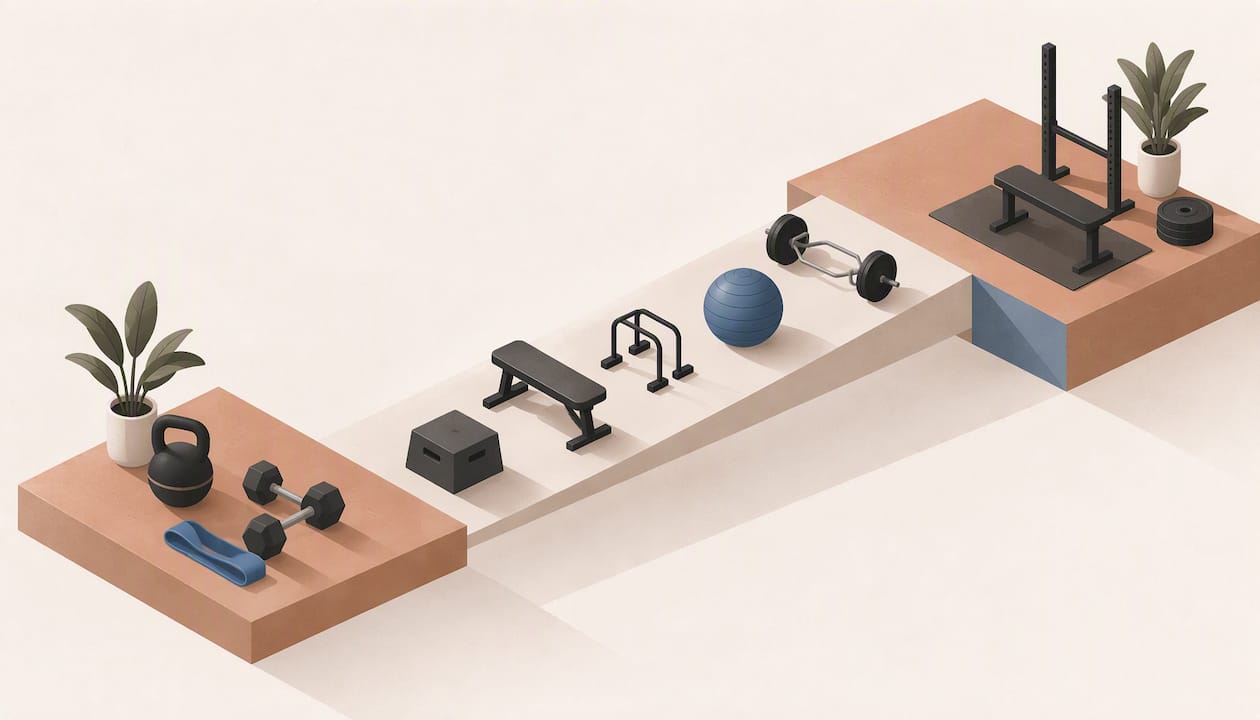
You don’t need a barbell deadlift to get strong after 40. The deadlift trains a pattern: hinging at the hips to lift a weight from the floor. Trap bar deadlifts, Romanian deadlifts, kettlebell deadlifts, glute bridges and hip thrusts all train that pattern, and some are kinder on a sore back, stiff hips or tight schedule.
This guide explains nine options in plain language. It shows who each one suits, how to do it, and how to move forward once it feels easy. It also covers when to ask for help, because pain is a good reason to change an exercise, but not a reason to stop strength training.
People over 40 usually look for a swap for one of five reasons:
None of these means the deadlift is “bad”, and none means you should avoid it forever. It means the barbell deadlift is one tool among several. The goal is to keep training your glutes, hamstrings, back and grip, which are the muscles that help you pick things up, climb stairs and stay independent.
Before choosing a swap, know what you are replacing. A deadlift works:
The UK Chief Medical Officers point out that muscle strength, bone health and balance underpin physical function and independence as we age. A good alternative keeps those benefits. It doesn’t need to look like a deadlift. It needs to train the same muscles with enough effort.
We have ordered these from easiest to most demanding. Start where you feel in control, not where your ego sits.
Best for: beginners, returning after a break, sore backs.
Lie on your back with knees bent and feet flat, hip-width apart. Brace your tummy lightly, squeeze your glutes and lift your hips until your body makes a straight line from shoulders to knees. Pause, then lower slowly.
Bridges are in the strengthening programme from Kent Community Health NHS Foundation Trust, written for people starting basic resistance work at home. Once 12 slow reps feel easy, hold a dumbbell across your hips, or lift one leg at a time.
Best for: building leg and hip strength with no equipment.
Sit on a sturdy chair, lean slightly forward and stand up without pushing off your hands. Sit back down slowly. It is also on the Kent NHS list. It isn’t a hinge exactly, but it builds the glutes and thighs you use every day. Progress by using a lower seat or holding a weight at your chest.
Best for: learning the hinge with a weight in front of you.
Stand with feet about shoulder-width apart, the weight between your feet. Push your hips back, keep your chest proud and your back flat, and grip the handle. Stand up by pushing the floor away, then lower with control. If the floor start is too low, put the weight on a block or sturdy step to raise it.
This is the most forgiving way to practise the real deadlift movement. Our hip hinge technique guide goes through the set-up in more detail.
Best for: hamstrings and glutes, and the one most people search for first.
The Romanian deadlift starts standing. Hold dumbbells or a bar at your thighs, soften your knees and push your hips back as the weight slides down your legs. Stop when you feel a stretch in the back of your thighs, usually around mid-shin. Squeeze your glutes to stand back up.
The difference from a standard deadlift is that you don’t start from the floor and you don’t reset between reps. That makes it easier to control your range. Keep the weight light at first. If your back rounds, you’ve gone too low or too heavy.
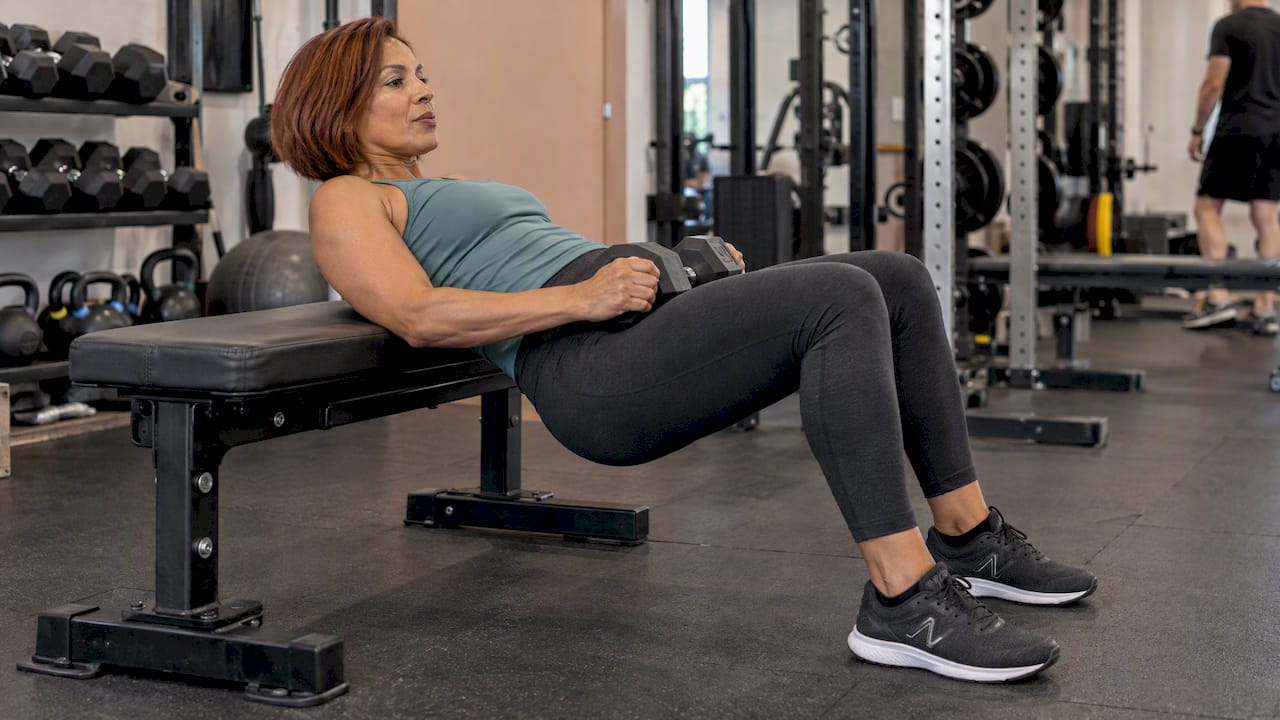
Best for: glute strength with very little load through the spine.
Sit on the floor with your upper back against a bench and the weight across your hips. Plant your feet, drive your hips up until your body is level, pause, then lower. Use a pad on your hips if the weight is uncomfortable. It builds the same glute strength the deadlift relies on, and many people find it easier on the back.
Best for: hinge power and conditioning, once you can hinge well.
The swing is a fast hinge: hips go back, then snap forward to send the bell to chest height. Your arms guide it, they don’t lift it. Learn the slow kettlebell deadlift first. If you can’t hinge with control at slow speed, you won’t at fast speed. Ask a coach to check your first few sessions.
Best for: people who want to lift heavier with a more comfortable position.
You stand inside the bar and hold handles at your sides. The weight stays closer to your body than with a straight bar, and the handles are higher, so the start position is easier for many people. It is a very good heavy option when you have access to the equipment. It still needs good technique, so build up gradually.

Best for: experienced lifters who struggle with the bottom of the lift.
The bar starts on blocks or safety pins around knee height. You skip the hardest part of the floor pull and still load the back, glutes and grip. It suits people who have trained before. If you are new, pick one of the options above first.
Best for: balance, hip stability and evening out left and right.
Stand on one leg with a light weight in the opposite hand. Hinge forward, let the back leg float behind you, then stand tall. Touch a wall or rail with your free hand if you wobble. It uses far lighter weights than a normal deadlift, which is a plus if heavy loading bothers you. It also trains balance, which UK guidance says matters more as we age.
| Exercise | Difficulty | Equipment | Good if you… |
|---|---|---|---|
| Glute bridge | Very easy | None | are starting or returning |
| Sit-to-stand | Easy | A chair | want simple leg strength |
| Kettlebell/dumbbell deadlift | Easy to medium | One weight | want to learn the hinge |
| Romanian deadlift | Medium | Dumbbells or bar | want strong hamstrings |
| Hip thrust | Medium | Bench, weight | want glute strength |
| Kettlebell swing | Medium to hard | Kettlebell | can already hinge well |
| Trap bar deadlift | Medium to hard | Trap bar | want to lift heavier |
| Rack pull | Hard | Bar and rack | are experienced |
| Single-leg RDL | Medium | Light weight | want balance and stability |
There is no perfect replacement, and the exercise you choose should fit your goal and your current ability. NHS guidance on strength work is about working all the major muscle groups, not about one lift. Use these questions:
The NHS says adults should do strength work on at least two days a week, covering the legs, hips, back, tummy, chest, shoulders and arms. It suggests 8 to 12 reps per set, to the point where another rep would be hard to do without help.
In practice:
The ACSM overview makes a point we agree with: consistency matters more than complexity, and the best programme is the one you will actually keep doing. If you want a simple weekly structure, see our guides to strength training for over 40s and full body versus split training.
You don’t need a gym for most of the options above. Glute bridges, sit-to-stands and single-leg RDLs need no kit. Dumbbells or a kettlebell cover deadlifts and RDLs. For extra resistance, an adjustable resistance bands set lets you change the load as you improve. Stand on the band and hinge against it, or loop it around your hips for bridges.

Bands feel lighter at the start of a movement and heavier at the top, so they suit the glute-focused finish of a hinge well. Start with the lightest band, then step up when the last reps feel easy.
Back pain is common and it makes people nervous about lifting. NHS musculoskeletal guidance explains that the back is strong and built for movement, and that controlled strength work can help recovery and reduce pain when managed well. The practical lesson is to start with easier versions rather than avoiding hinging entirely.
Some sensible rules:
See a GP or physiotherapist first if you have pain that has lasted more than three months, pain that spreads down a leg, numbness or tingling, or weakness in a leg. Some narrowing of the spinal canal (lumbar stenosis) is a normal part of ageing and often causes no problems, but if it does cause symptoms, you need advice tailored to you. Seek urgent medical help if you have any loss of bladder or bowel control, or numbness around your groin or buttocks.
Here’s a starter week for someone training twice. Take at least a day between sessions.
Day 1
Day 2
The carry also builds grip, which is worth caring about. See our guide to grip strength over 40 for what is normal and how to build it.
We train adults over 40 in small groups in Sheffield, and the same worry comes up again and again: “I can’t deadlift properly, so should I give up?” No. We don’t treat the deadlift as a test you pass or fail.
We look at what each person can do well today. For one member that is a kettlebell lifted from a block. For another it is a trap bar. The hinge is the skill, and the weight on the bar is only the outcome. When the skill is good, the weight goes up on its own.
A few things we believe:
— Vitalij
If you are in Sheffield and want a coach to pick the right hinge for you, small group personal training at UNIT Health & Performance gives you individual plans in a supportive, non-intimidating group. If you prefer a more varied week, our fitness classes include conditioning and hybrid sessions. You can also visit our home page to see how we work.
For most people over 40, the kettlebell or dumbbell deadlift is the best place to start, because it teaches the same hip hinge with less demand on your back. The trap bar deadlift is a good next step when you want to lift heavier. The right choice depends on your goal, your equipment and any pain you have.
The closest swaps are the single-leg Romanian deadlift, the hip thrust and the kettlebell deadlift. For a lighter option, try the glute bridge. All of them train your glutes and hamstrings, so pick the one that feels most comfortable and that you can do with good control.
For most healthy adults, yes, when you build up gradually and keep good technique. The back is built to lift and adapts to gradual loading. If you have ongoing pain, numbness or tingling, speak to a GP or physiotherapist before you load a hinge.
UK guidance says to work all major muscle groups on at least two days a week. Two short full-body sessions that include one hinge and one squat-type move are enough to start with. You can add more later if you recover well.