Yes. Appropriately supervised, progressively dosed plyometric training is effective and safe for improving jump, sprint and change-of-direction ability in youth athletes. The single most important rule is sequence: teach landing mechanics first, run sessions once or twice a week, and only add intensity once a child can absorb a jump before you ask them to produce one. Most well-run programmes typically need a couple of months to show reliable gains.
TL;DR:
- Effective plyometric training for youth athletes requires a structured, phased approach focusing on landing mechanics before progressing to power exercises.
- Gains are most reliable when programs last at least eight weeks with sessions twice weekly, achieving up to 16.85% improvement in jump height in prepubertal children.
- Readiness depends on coordination and control, not age alone, with proper supervision, warm-up, appropriate footwear, and safe surfaces being essential safety measures.
- Progression should be based on movement quality, with children only advancing when they master landing and control in each phase before increasing intensity.
- Coaches should use short, vivid cues and monitor technique closely, avoiding excessive volume or skipped landing work to prevent injury and maximize benefits.
Trials consistently back this up. Meta-analytic work on adolescent team-sport athletes finds plyometric training reliably improves jump height, standing long jump, sprint speed over short distances, and change-of-direction performance, with the biggest gains showing up in programmes running eight weeks or longer, or totalling sixteen sessions or more.
One randomised trial gives a clear sense of scale. Prepubertal soccer players who ran an eight-week, twice-weekly plyometric programme increased their countermovement jump height by 16.85%. That’s not a rounding error. It’s the difference between a child who can just clear a low hurdle and one who clears it with room to spare.
Statistic: An 8-week plyometric programme run twice-weekly increased countermovement jump height by 16.85% in prepubertal soccer players.
A separate 12-week programme using around 20 minutes of plyometric work per session improved sprint speed, horizontal jump and leg stiffness in youth soccer players, and the gains held up regardless of where each child sat on the maturity curve. The pattern across the research is the same: consistency over months beats intensity over days.
Age alone doesn’t tell you much. A wiry, coordinated nine-year-old can be more ready for hopping drills than an uncoordinated thirteen-year-old who has just gone through a rapid growth spurt. Readiness is better judged by what a child can already do.
Beyond that, the basics of good coaching still apply: a proper warm-up, sensible footwear, a surface that isn’t concrete or waterlogged, and a coach who can actually see every child, not just the loudest one.
Pro Tip: If a child can’t land a jump quietly on their own, they’re not ready for a hopping drill yet. Fix the landing before you touch the jump.
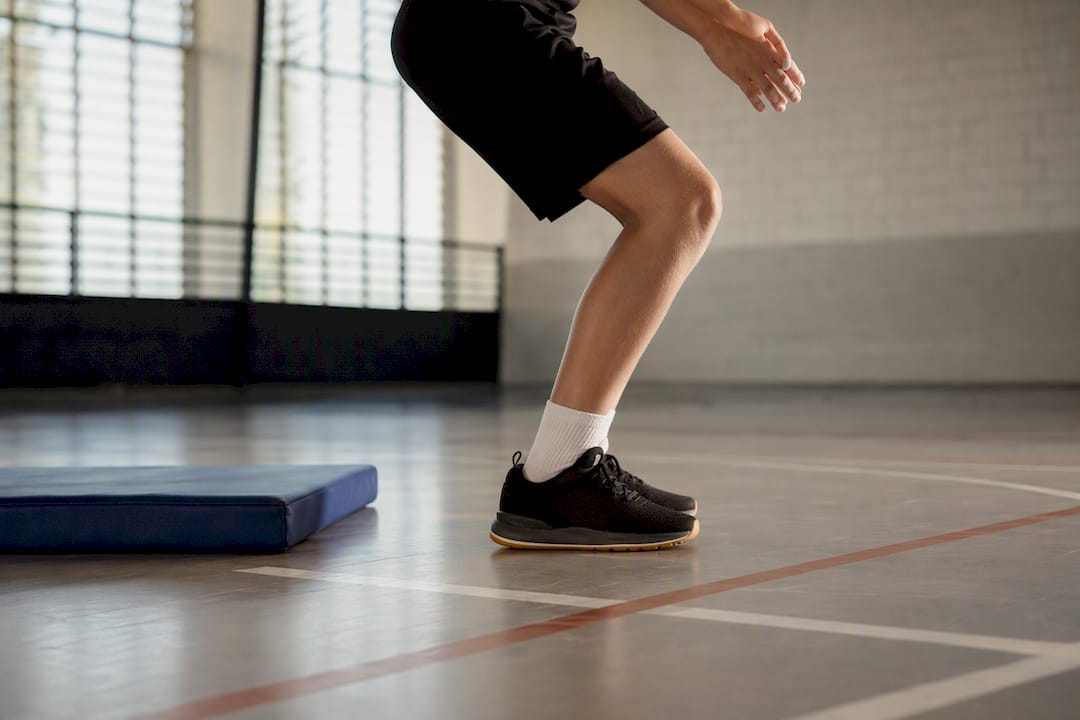
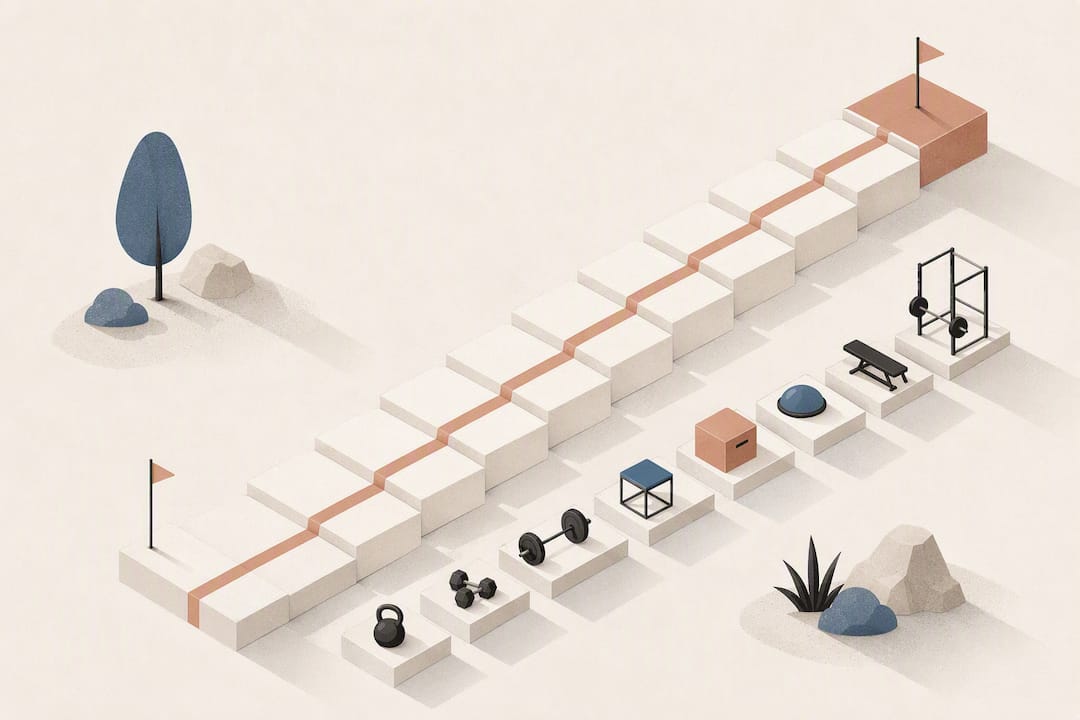
Skipping straight to jump squats because a child looks athletic is the fastest way to waste eight weeks of training. Build the programme in phases instead, and only move a child forward once they’ve earned it.
The decision to move a child from one phase to the next should hinge on movement quality, not the calendar. If landings are still sloppy after four weeks, stay in Phase 1 for another two. There’s no prize for rushing it.
Here’s a practical bank of exercises for each phase, with ways to scale them up or down depending on the child in front of you.
Foundations phase
Plyometric strength phase
Plyometric power phase
None of this needs fancy kit. A painted line, a low step and a bit of grass or a sprung floor will do the job. Firm ground and sand both produce real gains when progressed carefully, and neither produced injuries in the trial that tested them.
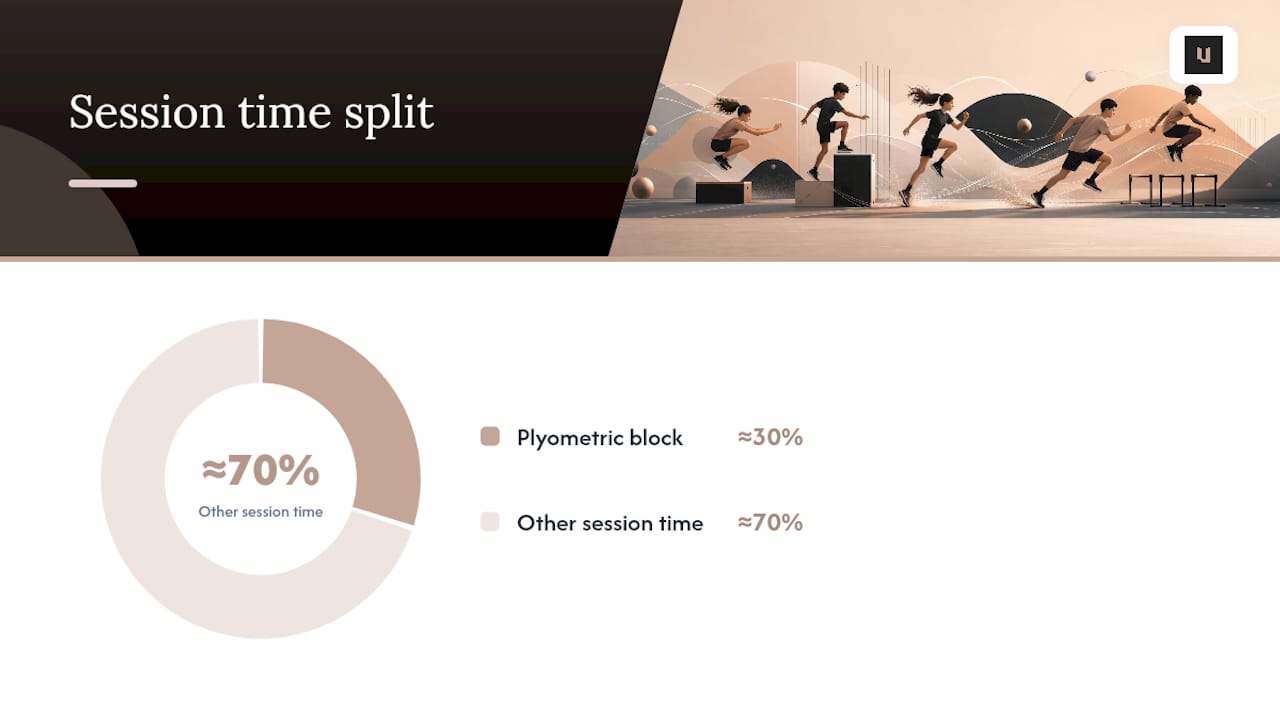
Here’s a template you can hand to a coach or adapt yourself. Each session runs 45 to 60 minutes total, with the plyometric block itself taking up 12 to 20 minutes in the middle.
Every session follows the same shape: a proper warm-up, the plyometric block, then a cool-down. Leave at least 48 hours between sessions so young bodies can recover, and treat plyometrics as one part of a broader week that also includes strength training and skill practice, not a replacement for either.
Pro Tip: Keep a simple log of jump height or broad jump distance every two weeks. Small, steady numbers going up matter more than any single impressive session.
Youth athletes respond better to a short, vivid cue than a technical instruction. “Land like a cat” beats “flex your knees on impact” every time, and turning drills into a game (who can land the quietest, who can stick the landing longest) keeps quality high without anyone feeling like they’re being drilled.
The most common mistakes are predictable:
Track progress with simple, repeatable tests: a countermovement jump, a standing broad jump, a short sprint time. Pair those numbers with how the child actually feels, sleep quality and soreness included, before deciding to push the next phase.
Youth athletes can benefit from small, coached group training where landings are closely monitored and corrected in real time. Our youth athlete programme builds speed, agility, strength and power in exactly the phased order this guide describes, adjusted to each athlete rather than a generic template.
For parents weighing a supervised programme against doing it at home, the honest answer is that technique feedback is hard to give yourself. A coach who spots a collapsing knee on rep three, before it becomes a habit, is worth more than any exercise list.
— Vitalij
Coached programmes offer families an alternative to figuring out plyometrics alone from online videos and informal settings. The real advantage is supervision that catches technique errors before they become habits, delivered through small-group coaching rather than a one-size-fits-all class.
Our youth athlete programme takes young athletes through exactly the phased progression this guide sets out, landing mechanics first, power work later, with a coach watching every rep. It sits alongside our small group personal training for older teens who want to combine plyometric work with strength training under the same roof. If your child plays a sport that demands speed off the ground, whether that’s football, netball or athletics, get in touch to enquire about a place in the next intake and find a session time that fits your week.