
Most children should not specialise early in a single sport, and the evidence behind that advice is consistent. Year-round, single-sport training before adolescence raises the risk of overuse injury and burnout, and it does little to guarantee long-term success. A small group of early-entry sports, such as gymnastics or figure skating, are genuine exceptions, but for most children, variety and gradual focus work better.
TL;DR:
- Early specialization increases the risk of overuse injuries, burnout, and reduced enjoyment, especially when children train year-round in a single sport with high volume.
- Most elite athletes have diverse sporting backgrounds, often sampling multiple sports until mid-adolescence, and early focus doesn’t guarantee long-term success.
- Peak height velocity during adolescence raises injury risk due to rapid bone growth, requiring adjustments like reduced training load and increased variety during this period.
- Incorporating strength, mobility, and neuromuscular training into regular sessions can reduce injury risk by around 35 percent in youth sports.
- Monitoring training volume, ensuring adequate rest, and prioritizing enjoyment help prevent burnout and injuries, especially when children are in growth spurts or engaging in early specialization.
Researchers generally define sport specialisation as intensive, year-round participation in one sport to the exclusion of others. That definition sits at one end of a spectrum: at the other end is “sampling”, where a child tries several sports, builds a broad range of movement skills, and plays mostly for fun. Most young athletes sit somewhere in between, which makes the term harder to pin down than it first appears.
A study of 414 youth football players defined specialisation using criteria such as whether a child quit other sports to focus on one, whether they rated that sport as more important than others, and whether they trained it more than eight months a year. Under that measure, a substantial share of the group counted as highly specialised, and researchers use similar multi-point scoring systems rather than a single clean cut-off, which is why studies on the topic do not always agree on numbers or age thresholds.
A few features tend to separate specialisation from healthy, focused training:
The practical problem for parents is that “specialised” is not a fixed label. A child who plays club football four nights a week and nothing else in summer is specialising, even if nobody calls it that. The term matters less than the pattern: exclusion of other activities, high year-round volume, and little recovery time.
The clearest risk linked to early specialisation is overuse injury. Growing bones, tendons and growth plates are more vulnerable to repetitive strain than adult tissue, and repeated single-sport loading without variety or rest gives those structures no chance to adapt.
Clinical reviews describe a consistent pattern: early specialisation is associated with a higher risk of overuse injuries and burnout, and the same reviews note that sampling multiple sports in childhood is often linked to longer athletic careers and less dropout. Common overuse diagnoses in young athletes include apophysitis (inflammation at growth plate attachment sites, such as Osgood-Schlatter disease at the knee), bone stress reactions, and tendinopathy, all of which stem from repetitive load without adequate recovery.
Among highly specialised youth football players studied, 43% reported gradual-onset overuse injuries, compared with lower rates among their less-specialised peers, according to a study from the University of Gloucestershire. That gap illustrates the practical cost of year-round single-sport training in a contact sport context.
A later review of the health consequences of youth sport specialisation reinforces this picture and widens it to psychosocial harm. It points to several recurring patterns:
None of this means specialisation guarantees harm, and the evidence has real limits. Much of the research relies on self-reported training history, which is hard to verify, and studies vary in how they define “specialised”, making direct comparisons difficult. Few long-term studies have followed the same children from early specialisation through to adulthood, so some of the burnout and dropout findings rely on shorter follow-up windows than researchers would like. What the evidence supports is a reasonably confident pattern, not a precise dose-response curve: more exclusive, higher-volume, younger-onset specialisation tracks with more reported injury and more reported burnout.
The short answer is no, not reliably, and that surprises a lot of parents. Reviews of elite athlete development consistently find that many top performers sampled multiple sports through childhood and narrowed their focus later than popular narratives suggest. Early specialisation is not a prerequisite for elite achievement in most sports, and the clinical literature on youth sport specialisation explicitly recommends caution about pushing children into single-sport training on the assumption that it accelerates success.
There are genuine exceptions. Sports where peak performance depends on skills that must be learned at a very young age, such as artistic gymnastics, figure skating and diving, are often called “early-entry” sports, and some early technical focus in these disciplines may be necessary. Even here, though, the injury and burnout risks described above still apply, so early entry is not a free pass against the same caution.
One of the more subtle problems with early specialisation is how it interacts with biological maturity. Children of the same chronological age can differ by several years in biological development during adolescence, and early-maturing children are often faster, stronger and more coordinated purely because their bodies are further along, not because they have more talent. UK Coaching’s guidance on growth and maturation warns that this can distort talent identification: coaches and scouts may select early maturers into elite pathways while overlooking later-maturing children who catch up, or overtake, their peers by late adolescence.
Three patterns are worth holding onto here:
A useful working model splits childhood sport into phases rather than fixed ages, because children develop at different rates. Roughly between 6 and 12 years old, most children benefit from a “sampling phase”: trying several sports, building broad movement skills, and treating competition as secondary to enjoyment. UK Coaching’s resources on movement skills recommend exactly this approach, arguing that fundamental movement skills, built through varied activity, transfer across sports later.
Narrowing focus towards one sport tends to make more sense from mid-adolescence onward, once a child has a broad movement base, has expressed a clear preference, and is physically and emotionally ready for higher training loads. Delaying that narrowing is not a missed opportunity. It is, based on the available evidence, the safer and often more effective route.
A few practical steps help parents judge whether their child’s current training pattern is reasonable:
Pro Tip: If your child wants to try a new sport mid-season, let them. The “wasted” months in one sport are rarely wasted; they usually become transferable skill and recovered motivation.
Peak height velocity, or PHV, is the point during the adolescent growth spurt when a child grows fastest, typically over a window of a year or so during early-to-mid adolescence, though timing varies widely between individuals. During and just after this window, bones lengthen faster than the muscles and tendons around them can adapt, which temporarily reduces flexibility, coordination and tissue tolerance to load. This is one of the highest-risk periods for overuse injury in youth sport, and it is also the period when many talent pathways push training volume up, not down.
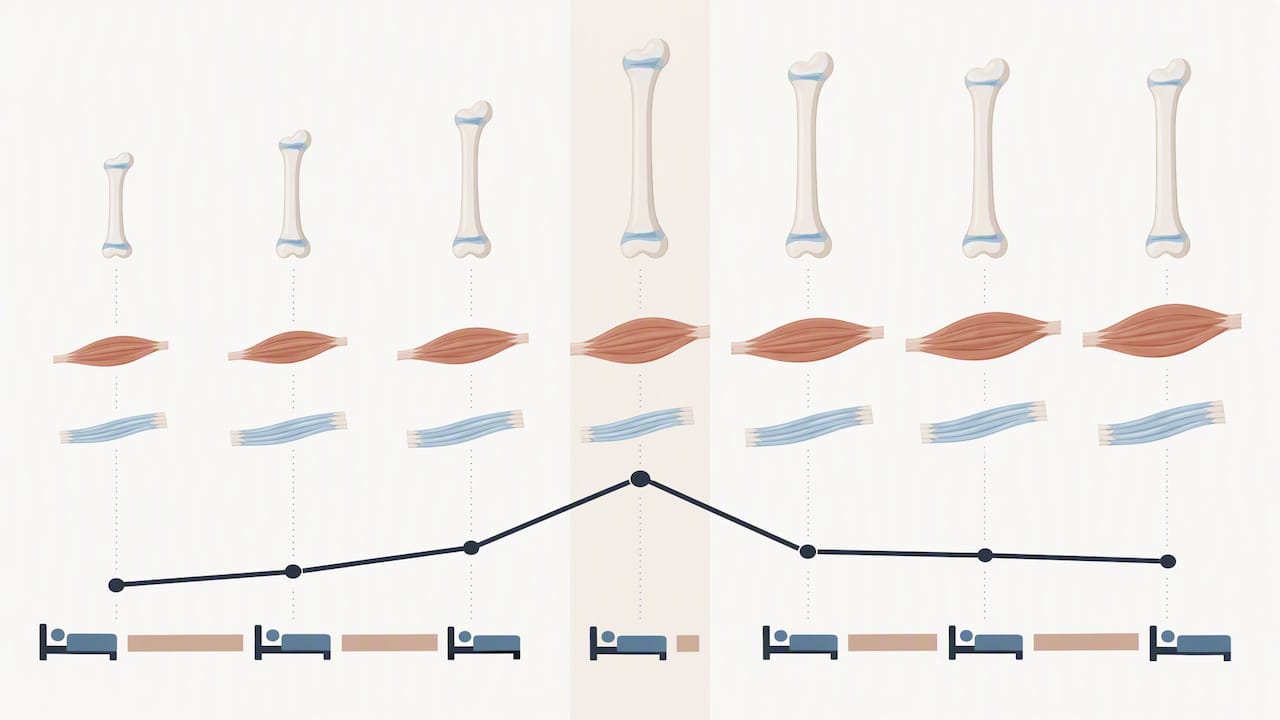
Reviews of early specialisation in soccer and academy pathways point to exactly this mismatch: as on-pitch hours increase through academy progression, injury risk during the PHV window rises with it, and the same reviews call for reduced sport-specific volume and increased training variety at this stage, alongside neuromuscular training to protect developing joints.
Practical adjustments around PHV tend to include:
Bio-banding is a practical response some academies and clubs now use: grouping young athletes by biological maturity (using measures like estimated height velocity) rather than strict chronological age, at least for some training or competition. The aim is to reduce the mismatch where an early-maturing 13-year-old trains or competes against a late-maturing peer of the same birth year. Done well, bio-banding can make training fairer and reduce injury risk from uneven physical mismatches. The caution is that it is a training and talent-development tool, not a long-term label: a child’s maturity status at 13 says little about their eventual size, strength or sporting future.
Pro Tip: Ask any club or academy whether they track growth velocity (even simple standing height measured every few months) and whether training load changes when a child enters a growth spurt. A programme that cannot answer either question is not managing this risk.
Strength training for children is one of the most misunderstood areas of youth sport. Many parents worry it stunts growth or damages joints. The evidence does not support that fear: supervised, age-appropriate strength training is protective rather than harmful, building the tissue resilience that repetitive sport-specific movement alone does not provide, according to UK Coaching’s guidance on athletic development.
The evidence on structured injury prevention programmes is unusually strong for a youth sport topic. A 2024 systematic review and meta-analysis found that exercise-based injury prevention programmes incorporating strength, flexibility and stability training reduced overall, lower-limb, knee and ankle injuries by approximately 35% in youth team sports, according to the review published through the University of Gloucestershire. That is a substantial reduction for a relatively simple intervention: most of these programmes take 10 to 15 minutes as part of a normal warm-up.
Effective programmes tend to share the same core components:
Integrative neuromuscular training, which combines strength and motor skill development in a single session, is specifically recommended for athletes who specialise early, because it fills gaps left by sport-specific training alone. A footballer who only trains football skills rarely develops the general strength and balance that protect joints under unfamiliar loads.
In practice, a well-run youth strength and conditioning session for a child aged around 10 to 14 might include a dynamic warm-up, bodyweight or light-resistance strength exercises (squats, lunges, planks), balance and landing drills, and a short skill or speed component, all supervised by a coach who adjusts load for each child’s stage of growth. Sessions twice a week, outside of sport-specific training, are a reasonable starting point for most young athletes, alongside the sport itself rather than instead of it.
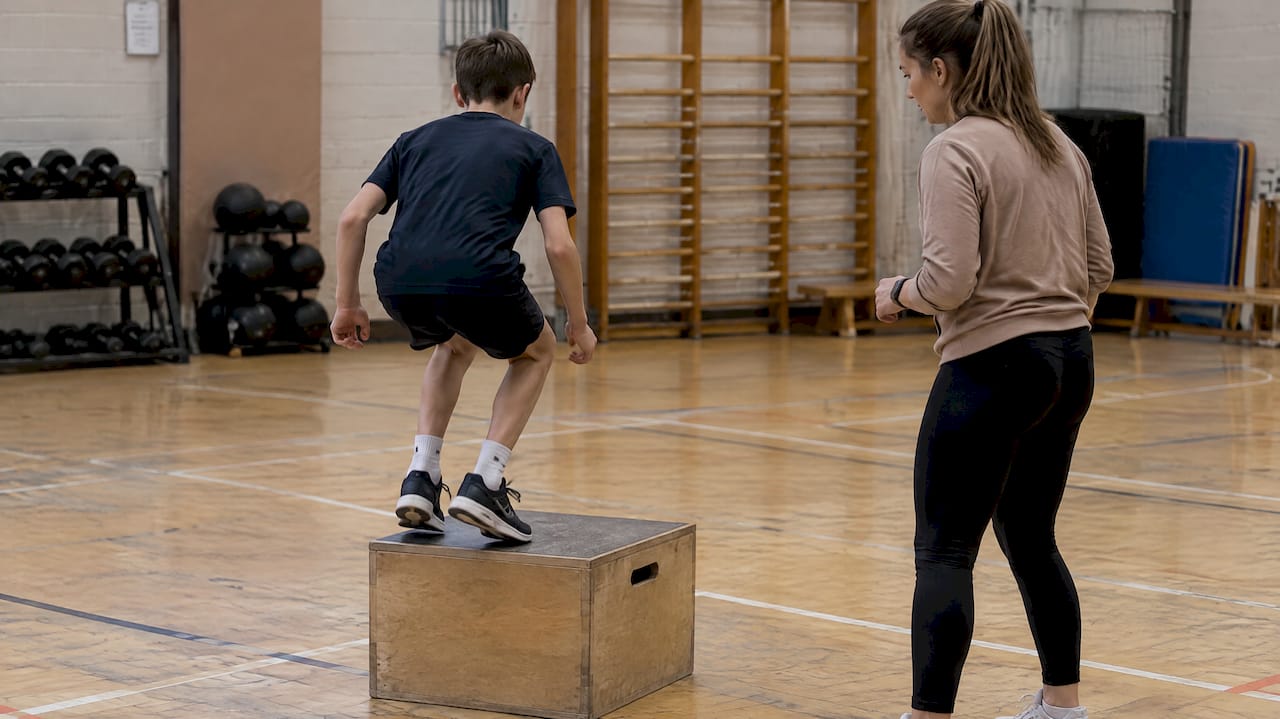
If a child does develop pain, NHS guidance on common growth-related conditions such as Osgood-Schlatter disease recommends conservative management: activity modification, physiotherapy, and a graded return to sport rather than immediate rest followed by a sudden return to full training.
A short checklist helps turn research into a practical conversation with a coach or club:
A few red flags are worth acting on quickly: persistent pain that does not resolve with a few days’ rest, a noticeable drop in enjoyment or motivation, comments about dreading training, and social isolation from friends outside the sport. Any of these warrants a conversation with the child, not just the coach.
If a child is already specialising and changing sport is not realistic right now, the harm can still be reduced. Build in at least one full rest day a week, add general strength and mobility work alongside the sport, protect sleep, and keep the door open to other activities in the off-season. Tools such as Athlo’s parent resources can help manage schedules and communication with coaches, which makes it easier to actually apply these adjustments rather than letting a busy calendar override them.
A youth athlete development approach includes programmes like The SpeedAcademy and The SuperStrong, built around the same principles covered above rather than generic drills borrowed from adult training.
The approach centres on a few consistent elements:
Parents can read more detail on the practical side of this work in the gym’s piece on injury prevention training for young athletes, which covers the kind of exercises and programme structure used in sessions, and in the broader resource on youth athlete training for parents wanting more background on training age and development pacing.
The evidence here does not call for anxiety, it calls for perspective. Most children do not need a single-sport pathway at age nine to have a good shot at enjoying sport, staying injury-free and, if they want it, reaching a high level later. What tends to go wrong is not ambition, it is rigidity: a packed calendar, no off-season, and a child’s enjoyment quietly sliding down the list of priorities beneath results and selection.
Watching for enjoyment is not a soft metric, it is one of the better predictors of whether a child stays in sport long enough to benefit from it. If pain becomes persistent rather than occasional, that is a signal to involve a GP, physiotherapist or paediatric sports clinician rather than to push through it. The rest is mostly about pacing: variety early, focus later, and load that respects a growing body.
— Vitalij
Youth athlete coaching offered by some programmes treats injury prevention and development pacing as part of the programme rather than an afterthought. Programmes like The SpeedAcademy and The SuperStrong combine speed, agility, strength and power work with monitored progression, led by experienced strength and conditioning coaching.

The programme suits young athletes training in football, rugby, athletics or similar sports who want a broad physical base alongside their main sport, rather than more hours of the same drills. Sessions focus on movement quality and gradual load increases, with coaching adjusted as each child grows and develops.
To find out more or enquire about a place, visit the youth athlete programme page at Unit Health & Performance.
This article is general information, not a substitute for advice from a qualified doctor. Consult a qualified healthcare professional about your own circumstances before acting on anything here.
There is no single fixed age, but most evidence favours a broad sampling phase through roughly age 12, with narrowing towards one sport from mid-adolescence for most sports. Early-entry sports such as gymnastics are an exception, where earlier technical focus is often necessary.
Sport specialisation means intensive, year-round participation in a single sport to the exclusion of others, often measured by training volume, exclusivity and the age a child started focusing on one sport. It sits at one end of a spectrum, with broader “sampling” of multiple sports at the other.
Early sports specialisation refers to intensive single-sport training that begins well before adolescence, typically before age 12, often involving year-round participation with little or no off-season. It is linked to higher reported rates of overuse injury and burnout in clinical reviews.
There is no agreed, research-backed ranking of the “most skilful” sports, since skill demands vary by discipline and are not something studies rank against each other. What the evidence does support is that early-entry sports such as gymnastics, figure skating and diving require earlier technical development than most team or endurance sports.