If you’re over 50, start progressive strength training now, twice a week is enough to see real results. Pick a simple framework, learn three or four core moves, and add a small amount of load every week or two. The evidence behind this comes from the UK Chief Medical Officers’ guidelines and NHS advice, so get a GP check first if you have a chronic condition.
TL;DR:
- Regular strength training twice a week using simple frameworks helps adults over 50 improve strength, balance, and functional independence safely.
- Prioritize six key movement patterns, including squats, step-ups, hip hinges, rows, presses, and core work, modified for joint pain or limited mobility.
- Start with 8 to 12 repetitions per set at an intensity close to a 7 or 8 out of 10, gradually increasing load, reps, or decreasing rest over time.
- Thorough warm-ups, proper technique, and cautious progression minimize injury risk, especially when managing joint issues or recovering from surgery.
- Supervised coaching and individual assessments enhance progress, technique, and safety compared to unguided training, with support available through small-group or personal training.
You don’t need five gym visits a week to get stronger after 50. What matters far more is picking a structure you’ll actually repeat, week after week, for months.
Three frameworks cover most people:
Choose based on honest answers to three questions: how much time do you actually have, how does your body recover between sessions, and where is your starting fitness right now? Someone recovering from a hip replacement and someone who has lifted casually for years need very different starting points, even if the goal, getting stronger safely, is the same.
Six movement patterns cover almost everything you need for strength, balance and daily function. Master these and you’ve built a complete programme.
Seated versions of the row and press work well for anyone with knee or hip pain, and resistance bands make every one of these movements achievable at home. Keep your spine neutral, move with control rather than speed, and pause briefly at the hardest point of each rep.
Pro Tip: Add one unilateral (single-leg or single-arm) exercise per session. Training one side at a time exposes strength imbalances that bilateral moves hide, and it’s one of the most effective ways to cut fall risk.
NHS guidance on strength and balance training gives a clear starting point: 8 to 12 reps per set, beginning with two sets and building to three as you adapt. Intensity should feel hard, near the point where one more rep would be difficult without a short rest, not maximal, not easy.
For those already comfortable with resistance training, dose-response research points to a workable target: 60 to 80% of your one-rep max, trained two to three times a week, across 2 to 3 sets of 8 to 12 reps, for 8 to 12 weeks before reassessing. If percentages mean nothing to you yet, use rate of perceived effort instead. A session should feel like a 7 or 8 out of 10, hard work, but never a grinding struggle.
Progress in this order, one change per session:
A systematic review covering a large group of older adults found that resistance training produced strong effect sizes for both handgrip strength and lower-limb strength, alongside measurable improvements in gait speed and physical function. Those aren’t small, cosmetic changes. They translate directly into fewer falls, easier stairs, and more confidence carrying shopping.
Most people over 50 can start straight away with bodyweight exercises and build from there. The exception: if you have a chronic condition, a recent major surgery, or uncontrolled high blood pressure, speak to your GP first.
Once you’re cleared to begin:
Stop and seek urgent medical advice if you experience chest pain, sudden severe joint pain, fainting, or uncontrolled dizziness during or after training. These aren’t normal training discomfort, they’re red flags.
Muscle responds to training, but it’s built during recovery, and that recovery slows slightly as you age. Protein intake matters more than most people realise: aim to spread protein across meals rather than loading it all at dinner, and check NHS dietary guidance for specifics suited to your health situation.
Sleep is the other half of the equation. Poor sleep blunts the muscle-repair process that follows a hard session, so treat seven or more hours as part of your training plan, not a separate lifestyle goal. Give major muscle groups at least 48 hours before training them again at the same intensity.
None of this replaces the actual training. Nutrition supports progressive resistance work, it doesn’t substitute for it.
Plan A: 2×/week simple session
Plan B: 3×/week compound split
Both plans work at home with just resistance bands and a sturdy chair, or in a gym with dumbbells and machines. Start with two sets on every exercise and build to three over a few weeks, exactly as NHS guidance recommends.
Joints and connective tissue take longer to prepare for load as you get older, which makes a proper warm-up less optional than it was at 30. Spend five to eight minutes on gentle, rhythmic movement, marching on the spot, arm swings, hip circles, before touching any resistance work. This raises muscle temperature and gets synovial fluid moving through the joints, which reduces stiffness during the working sets that follow.
Follow the general warm-up with two or three “rehearsal” reps of your first exercise using no load or a very light one. If today’s session includes squats, do a handful of bodyweight squats first. This isn’t wasted time, it’s where you catch a stiff hip or a cranky knee before it becomes a problem mid-set.
Cooling down deserves the same respect. A few minutes of slower movement after your last set helps bring your heart rate down gradually rather than abruptly, and light stretching of the muscles you just worked, held for 20 to 30 seconds each, supports recovery. Skip aggressive stretching immediately after heavy sets; wait until your muscles have had a minute or two to settle.
If you tend to feel stiff the day after training, don’t mistake that for a sign you did something wrong. Mild delayed soreness is normal, especially early on. Persistent joint pain that wasn’t there before, however, is a signal to revisit your warm-up, your technique, or your load, not to push through it.
Joint issues don’t rule out strength training over 50, they just change which version of each exercise you use. Someone with knee osteoarthritis can still build powerful legs; they just need a squat depth and step height that doesn’t provoke pain, and often a chair nearby for support and confidence.
Knee pain: swap deep squats for shallow sit-to-stands using a raised chair, and reduce step-up height until pain-free range increases. Leg press machines, where available, offer a controlled alternative with less shear force through the knee.

Shoulder pain: replace overhead pressing with a chest press at shoulder height, and use a neutral, palms-facing grip on rows, which tends to be kinder on the rotator cuff than an overhand grip.
Lower back issues: hip hinge patterns should be practised first with no load, focusing purely on keeping the spine neutral. A banded hinge or a supported hip thrust often feels safer than a traditional deadlift while you rebuild confidence and control.
Limited standing tolerance: seated rows, seated presses, and resistance-band work done from a stable chair let you train the same muscle groups without the balance demand of standing exercises.
The principle underneath all of these swaps is the same: change the exercise, not the goal. If a movement causes sharp or worsening pain, stop and adjust the range, load, or angle rather than pushing through, and involve a GP or physiotherapist if pain persists beyond normal training soreness. For those managing weight loss alongside joint concerns, particularly if using GLP-1 medication, preserving muscle during weight loss becomes an additional reason to keep resistance work in the mix rather than dropping it.
The biggest myth is that lifting weights after 50 is risky or that it’s “too late” to start. The research says the opposite. A systematic review of resistance training in frail and pre-frail older adults, covering 25 randomised controlled trials and over 2,200 participants, found significant improvements in strength, gait speed, balance and functional performance, even among people who started training with existing frailty. Age isn’t the barrier people assume it is.
A second myth: that strength training will bulk you up or make joints worse. Building visibly large muscle requires a specific, deliberate combination of high volume and calorie surplus that most people over 50 training twice a week for general health simply won’t hit. As for joints, controlled resistance work tends to strengthen the muscles and connective tissue around a joint, which usually improves stability rather than harming it.
Then there’s the fear that any twinge means damage. Some muscle fatigue and mild next-day soreness are a normal, expected response to new or increased load, not evidence of injury. The line to watch is sharp pain during a movement or pain that gets worse over days rather than easing.
Finally, many people assume strength training is separate from “cardio” and therefore less important for heart health or longevity. It isn’t separate. Better muscle mass and strength support metabolic health, mobility, and independence well into later decades, which is precisely why the UK Chief Medical Officers list it alongside aerobic activity as essential, not optional.

Programming for adults over 50 comes down to three things: watching technique closely, keeping sessions consistent, and progressing load in small, measured steps rather than big jumps. Self-guided training can work, but it’s easy to plateau or misjudge form without someone checking your movement. Small-group coaching, of the kind delivered through Small Group PT, tends to suit people who’ve had a fall, are new to resistance work, or simply want accountability built in. If you already train confidently alone, home-based frameworks like 3-2-1 remain a solid option.
— Vitalij
Small-group training sessions are built around individualised plans, not one-size-fits-all workouts, so your progression matches your body, not a template.
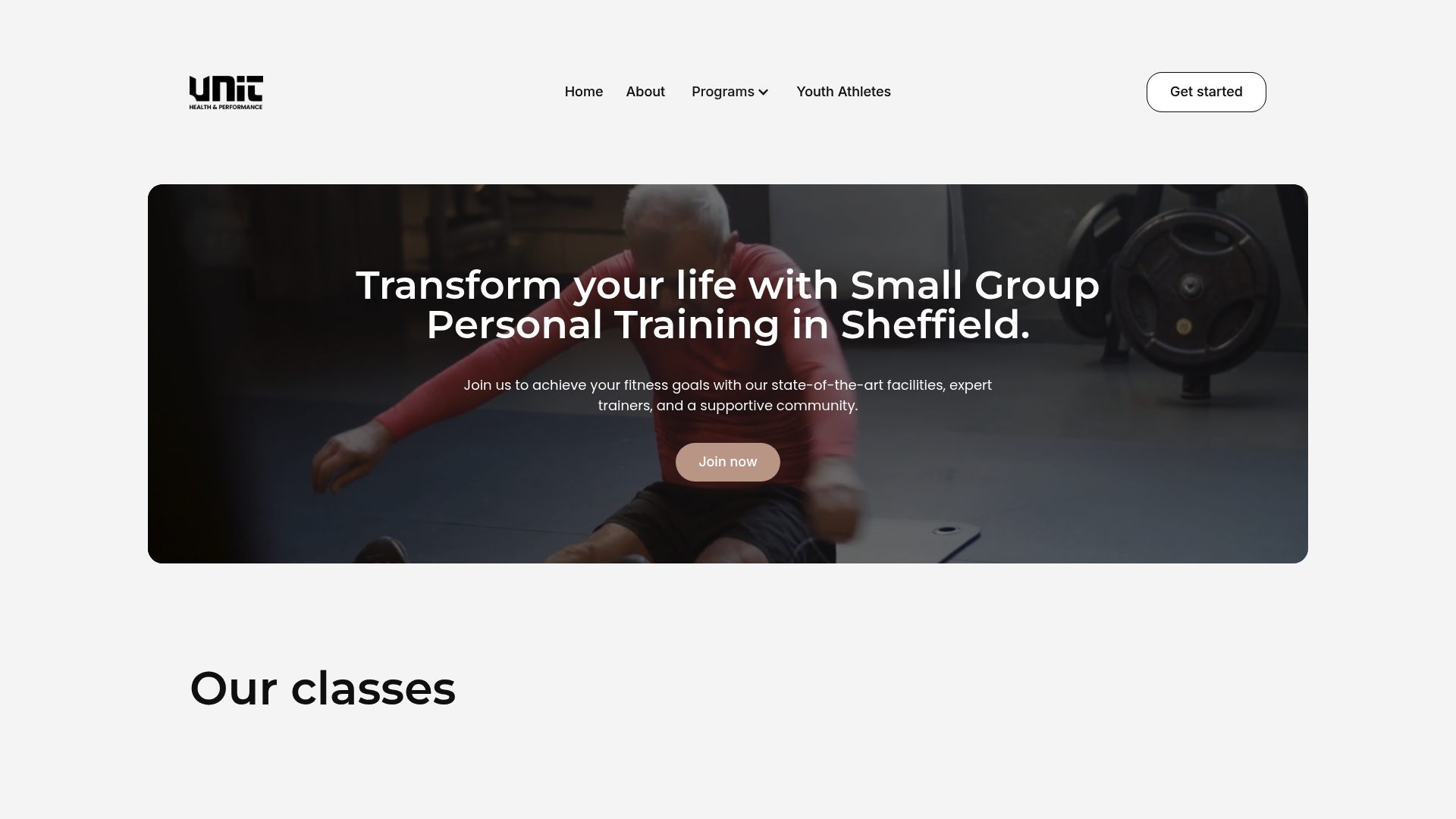
Every member starts with an assessment of movement, mobility and goals before a single weight goes on the bar. From there, sessions are coached in small groups, small enough for technique correction on every set, but social enough to keep you showing up. That combination matters most for the exercises covered above: sit-to-stands, hinges, rows and presses all improve faster with someone watching your form.
If you want structured strength work with people who understand training after 50, explore Small Group PT or browse the full range of fitness classes available, including conditioning and hybrid formats. Get in touch to book an initial assessment and see which format fits your goals and schedule.
At least twice a week, targeting all major muscle groups, according to UK Chief Medical Officers’ guidance. Three sessions a week works well if recovery allows it, but two consistent sessions beat three inconsistent ones.
It’s a simple framework: three compound exercises, two sessions a week, and one small progression added each session. It suits people who want structure without a complicated programme to follow.
You gain measurable strength, improved gait speed and better balance, even if you’ve never trained before. A large systematic review found meaningful improvements in handgrip and lower-limb strength among older adults who began resistance training.
A squat or sit-to-stand, a hip hinge, a row, a press, and a core or balance exercise. Together they cover the major movement patterns needed for strength, posture and fall prevention.
Yes, small-group sessions are built around individualised plans suited to adults over 40, including those starting strength training for the first time. Current pricing and session details are available on the Small Group PT page.