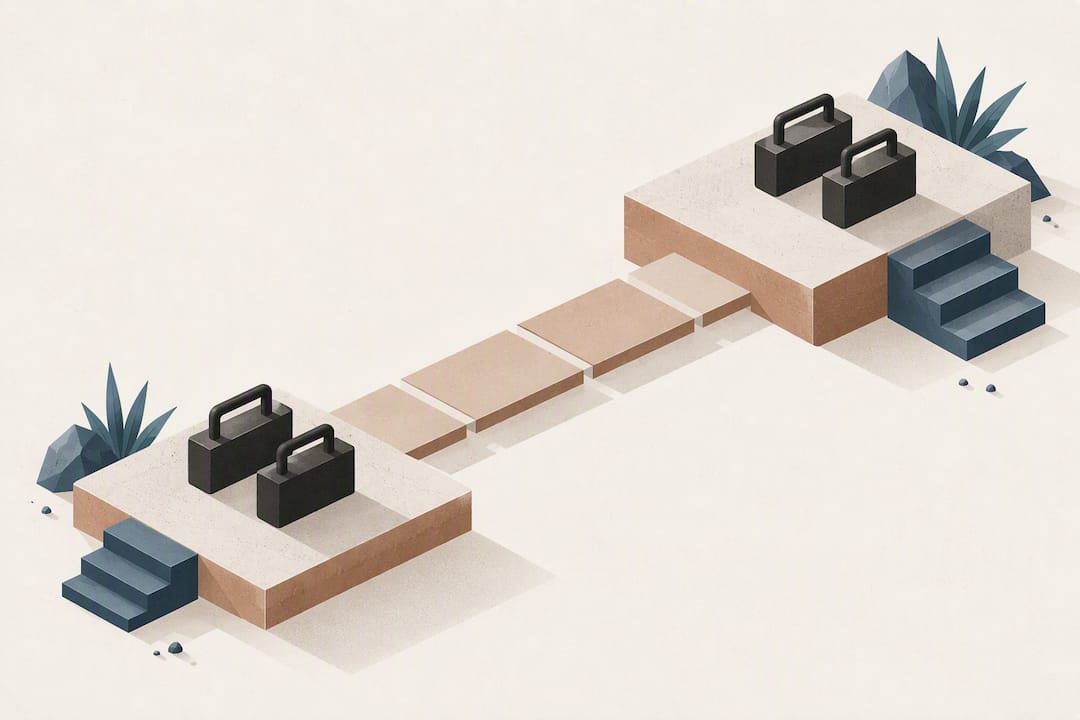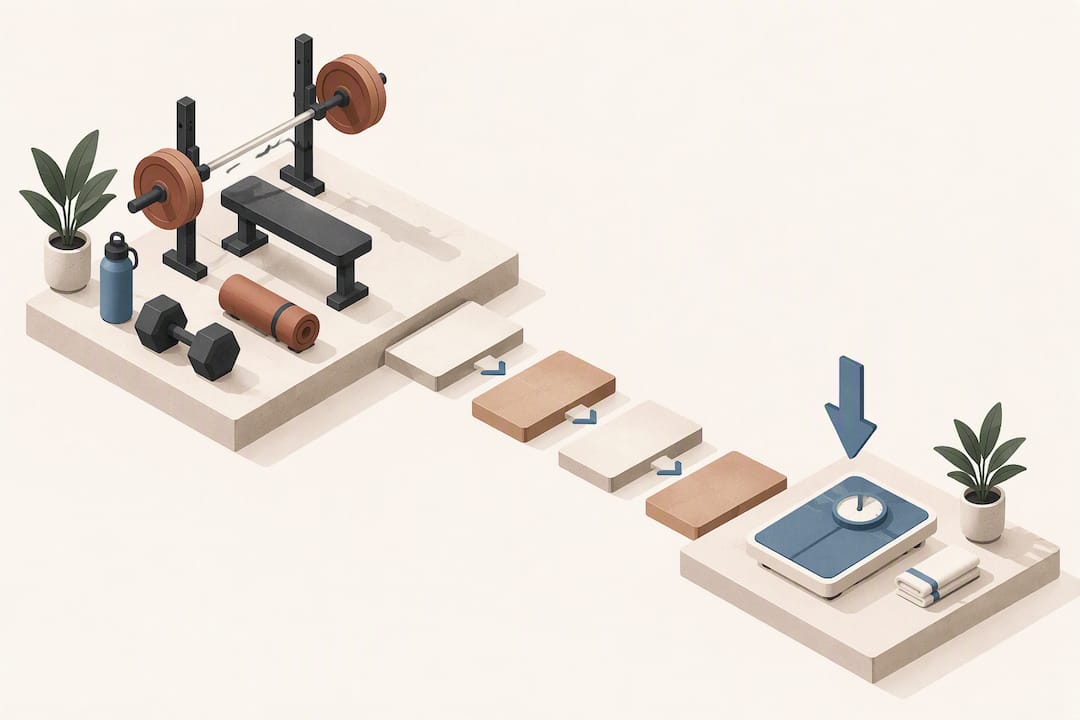
Yes, you should prioritise resistance training while taking a GLP-1 medication, to protect muscle and functional strength as the weight comes off. Aim for resistance work at least twice a week, paired with a protein-focused eating pattern of roughly 1.1 to 1.6 grams per kilogram of body weight daily. The sections below walk through why this matters, what the evidence says, and exactly how to build it into your week, including a starter training plan and nutrition tactics for days when appetite is low.
TL;DR:
- Resistance training should be performed at least twice weekly to mitigate muscle loss during GLP-1 weight reduction therapy.
- Protein intake of 1.2 to 1.6 grams per kilogram of body weight daily is recommended to preserve muscle mass when appetite is suppressed.
- Most muscle-strengthening exercises should be in the 6 to 15 rep range, emphasizing progressive overload and compound movements.
- Training loads should be increased gradually, with attention to technique, especially for beginners or those with health concerns, to prevent injury.
- Monitoring muscle strength through grip tests, sit-to-stand counts, and training logs can help track muscle preservation during treatment.
GLP-1 receptor agonists work mainly by reducing appetite and slowing how quickly food leaves your stomach, which lowers overall energy intake. That calorie deficit drives the weight loss these medications are known for, but weight loss is never just fat loss. Some of what disappears is lean tissue: muscle, and to a lesser extent bone and connective tissue.
Clinical reviews report that lean mass can account for roughly 15% to 40% of total weight lost on GLP-1 therapy, depending on the study and the population involved, according to a review of lean mass loss on GLP-1 drugs. That is a wide range, and it overlaps with what happens during calorie restriction without medication: dieting alone also costs you muscle. The difference is that GLP-1-driven weight loss is often larger and faster than a typical diet-only programme, so the absolute amount of muscle at stake can be bigger too.
This matters for reasons that go well beyond how you look in the mirror. Muscle is your largest reservoir of protein and a major driver of your resting metabolic rate, so losing it can make weight easier to regain once the deficit narrows. Strength itself tends to track with muscle mass, and losing grip strength or the ability to rise from a chair without using your arms is an early marker of frailty, not just an inconvenience. For older adults and people who started with low muscle mass before treatment, the stakes are higher still: a bigger proportionate loss of lean tissue can tip someone toward sarcopenia, the age-related loss of muscle mass and function, faster than it would otherwise.
A wide review on GLP-1 agonists and exercise concludes that pairing the medication with structured lifestyle changes, resistance training especially, helps offset this lean-mass cost and supports better metabolic outcomes overall. In other words, the drug handles appetite; training protects the muscle that the drug alone cannot.
None of this means GLP-1 medications are a poor choice. It means the body composition result depends heavily on what you do alongside the prescription, and resistance exercise is the lever with the most evidence behind it.
Getting enough protein is harder on a GLP-1 medication simply because you feel full sooner and want to eat less overall. That makes it more important, not less, to be deliberate about where your calories go.
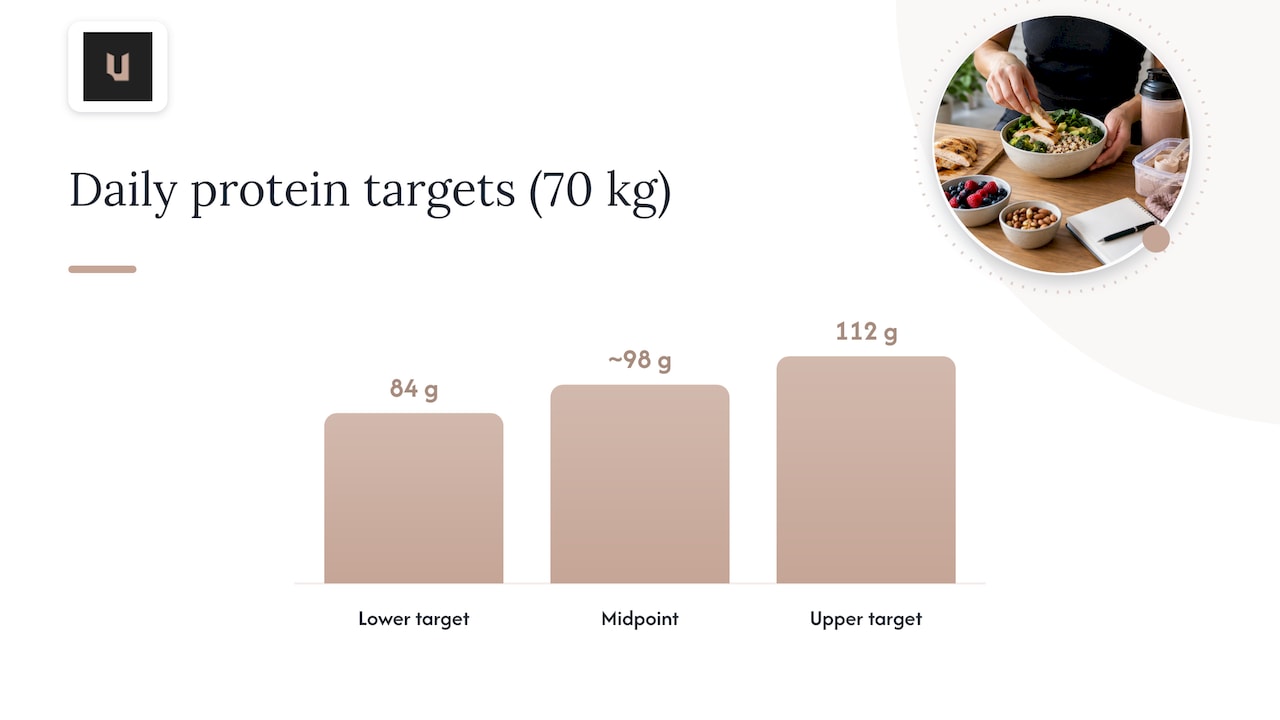
Recent trial protocols combining resistance exercise with GLP-1 or tirzepatide therapy commonly target protein intakes of around 1.2 to 1.6 grams per kilogram of body weight per day to help preserve muscle mass, according to a resistance training protocol for people on GLP-1 therapy. That works out to roughly 84 to 112 grams a day for someone weighing 70 kilograms, a useful starting range rather than a strict rule, since needs vary with activity level, age and how much muscle you are trying to protect.
Spreading that protein across the day matters as much as the daily total. The same protocols point to per-meal thresholds of approximately moderate amounts of high-quality protein as a practical target for triggering muscle protein synthesis, particularly useful when your total food volume is limited. Three smaller, protein-anchored meals tend to work better than one large meal and two token snacks.
A few tactics make this easier when your appetite has shrunk:
Supplements can help at the margins. Evidence on creatine, HMB and vitamin D suggests modest benefits for strength and lean mass when combined with resistance training, though the research specific to people on GLP-1 medications is still limited, according to supplemental evidence on creatine, HMB and nutrition. None of these replace adequate protein and training; they are adjuncts worth considering once the basics are in place, and omega-3 intake is sometimes mentioned alongside them, though the supporting data there is thinner still.
The UK Chief Medical Officers’ physical activity guidelines recommend muscle-strengthening activity on at least two days each week, working all the major muscle groups, with specific relevance called out for people using GLP-1 medications, according to the UK CMO physical activity guidelines. Two sessions a week is the floor, not the ceiling: many people preserving muscle during active weight loss do better with three.
A sensible prescription looks like this:
If you are new to lifting, or returning after a long break, start lighter than you think you need to. The first two to three weeks should prioritise learning the movement pattern correctly over chasing load, because poor technique under fatigue is where most training injuries happen. Older adults and anyone with joint issues or other health conditions benefit from a supervised introduction, where someone can watch your form and adjust the plan in real time rather than you guessing from a video.
Pro Tip: Use your rate of perceived exertion, how hard a set felt on a scale of 1 to 10, as your main guide early on; aim to finish most working sets around a 7 or 8, not a 10.
This plan assumes two sessions a week of 20 to 40 minutes, built around the same six to eight exercises so you can track progress clearly. Adjust load, not structure, if a particular day feels hard.
Weeks 1 and 2: build the habit. The goal here is consistency and technique, not intensity. Use a weight that lets you complete every set with room to spare.
Weeks 3 and 4: add volume. Keep the same exercises and add a third set to each, or add a short second circuit of the same movements at a lighter load if a third full set feels like too much on a low-energy day.
Weeks 5 and 6: add load, or add a session. If recovery and appetite allow it, increase the weight on your main lifts by a small, manageable amount, or add a third weekly session focused on the muscle groups that felt weakest. If energy is still unpredictable, stay at two sessions and simply nudge the load up slightly.
A second, slightly more advanced session for those with gym access might look like:
Home-based, pragmatic resistance programmes using bodyweight and bands have shown the ability to preserve or even build muscle function in short trials, which makes this plan workable whether you train in a gym or a living room, according to the same GLP-1 resistance training protocol. On a day when energy is genuinely low, cut the number of sets in half but keep one solid, near-top-effort set per exercise: that single set does most of the work of preserving strength, even when the rest of the session is scaled back.
Training consistently on a GLP-1 medication usually comes down to managing three things: fuel, energy, and recovery.
Fuelling is the most common sticking point. A small protein-rich snack 60 to 90 minutes before training, even half a protein shake or a pot of yoghurt, makes a noticeable difference to how a session feels when your appetite has been blunted all day. Keeping a ready-to-drink protein option in your bag or car removes the decision-making on days when cooking feels like too much effort.
Energy dips are common and predictable rather than random. A few adjustments help:
Recovery matters more, not less, when you are in a calorie deficit. Sleep is the biggest lever here: poor sleep blunts both appetite regulation and muscle repair, compounding the problem. Simple stress management, a short walk, reading before bed, or just protecting a consistent sleep and wake time, supports recovery more than any supplement. Light activity on rest days, walking or gentle stretching, tends to aid recovery better than complete inactivity.
Pro Tip: Track progress with more than the bathroom scale. Grip strength, how many reps you can do at a given weight, or how easily you climb a flight of stairs often improve even in weeks when the scale barely moves.
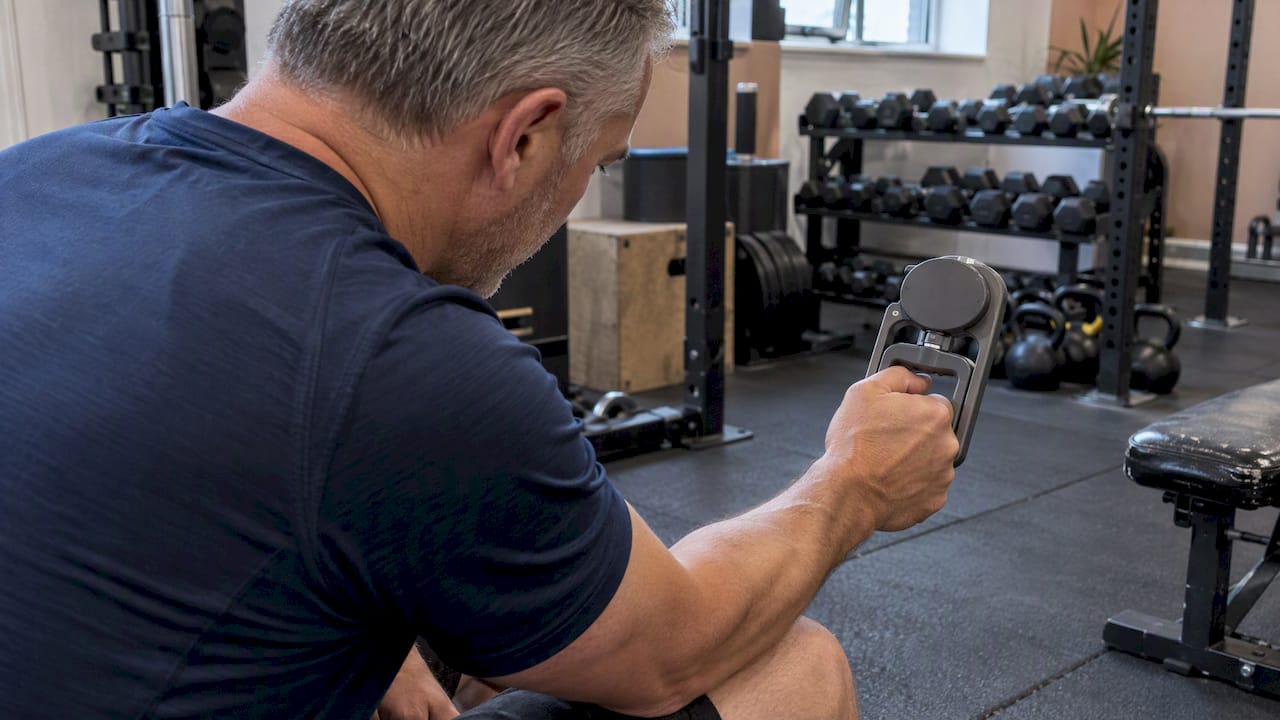
Practitioners who work with people on GLP-1 medications often describe treating strength sessions as fixed, non-negotiable appointments rather than optional extras, adjusting the load on a tough day instead of cancelling the session outright, according to guidance on GLP-1 receptor agonist considerations. That mindset shift tends to matter more than any single piece of equipment or supplement.
Most people can train safely on a GLP-1 medication, but a few situations deserve a call to your GP or prescriber rather than pushing through. Contact them if you notice rapid or unusual muscle weakness, severe or worsening fatigue that does not improve with rest, dizziness or fainting during exercise, or any new symptom that appeared after starting or increasing your dose.
A few simple checks help you monitor progress beyond body weight:
Extra caution applies to older adults, people with diabetes, and anyone returning to exercise after a long period of inactivity: starting lighter and progressing more gradually, ideally with some supervision, reduces injury risk without blunting results. GLP-1 medications are licensed to be used alongside physical activity and wider lifestyle changes, not as a replacement for them, which is exactly why the training and nutrition side of the picture carries real weight, according to the UK CMO physical activity guidelines. If balance or fall risk is a concern, particularly for older adults, a practical guide to fall prevention covers useful groundwork alongside a strength programme.
We run small group personal training for adults, many of them over 40 and several navigating exactly the appetite and energy changes that come with GLP-1 medication. Across our small group personal training sessions, the pattern we see most often is that adherence, not knowledge, decides whether muscle gets preserved.
Coached group sessions help in three practical ways. A coach calibrates load in real time, so a low-energy day gets a lighter session instead of a skipped one. Progression gets tracked properly rather than guessed at, which matters when your capacity is shifting month to month. Nutrition guidance can be folded into the same relationship, so protein targets are not something you are left to work out alone.
The community element matters too: training alongside others who are managing similar changes tends to keep people showing up on the weeks when motivation alone would not.
— Vitalij
Resistance training does more than protect the muscle that GLP-1 medications put at risk. It also improves how your body uses the glucose and insulin that the medication is already helping to regulate. Muscle tissue is the largest site of glucose disposal in the body, so having more of it, or at least losing less of it, supports better insulin sensitivity over the course of treatment.
Reviews on GLP-1 agonists and exercise describe resistance training as a complementary strategy that supports the metabolic goals of the medication rather than working against them, with physical activity recommended as part of optimising outcomes rather than an optional add-on, according to the review on GLP-1 agonists and exercise. The medication reduces appetite and improves glucose control through its own pathway; training adds a separate, complementary mechanism by improving how responsive your muscle tissue is to insulin.
This is also where the muscle-preservation argument loops back on itself. Losing a large share of lean mass during treatment can blunt some of the long-term metabolic benefit, since there is simply less muscle tissue available to take up glucose. Keeping that tissue through resistance training is one of the more direct ways to support the medication’s own goals, rather than simply a side project for appearance or strength.
There is no requirement to time workouts precisely around an injection, and most people can train on any day of their dosing cycle. That said, energy and gastrointestinal side effects, nausea, reduced appetite, occasional fatigue, tend to be strongest in the day or two following a dose increase or a weekly injection, according to guidance on GLP-1 receptor agonist considerations. Scheduling your heavier or more demanding session on a day when you typically feel better, and keeping a lighter session or an active rest day near the point in the week when side effects peak, tends to work well in practice.
It is worth eating something, even a small protein-containing snack, before training if a session falls close to a recent dose, since training on an empty stomach while appetite is already suppressed increases the risk of light-headedness or a flat, low-energy session. There is no evidence that strength training interferes with how the medication works, so the main consideration is comfort and energy management rather than any drug interaction.
Most of the public conversation around GLP-1 medications focuses on the number on the scale, and that is where the advice usually stops. The more useful question, how much of that weight loss is muscle, gets asked far less often, even though it decides whether the result is a leaner, stronger body or a lighter, weaker one.
The conventional advice to “just move more” undersells what is actually needed. Walking is good for general health, but it does not create the stimulus muscle needs to be preserved under a calorie deficit. Resistance training is not an optional extra alongside a GLP-1 prescription: it is the single most effective lever available for protecting the tissue the medication puts at risk.
If there is one priority to take from all of this, it is consistency over intensity. Two properly run sessions a week, sustained for months, will do more for your long-term result than an ambitious programme abandoned after three weeks of low energy and a bruised sense of failure.
— Vitalij
We built our small group personal training around exactly this problem: people who want to keep their strength and muscle while their energy, appetite or routine are in flux. Sessions are coached and kept small, so load gets adjusted to how you are actually feeling that day rather than following a generic script.
If you are in Sheffield and want supervised, adjustable strength training while managing a GLP-1 medication, you can find out more and check availability for Small Group PT.
This article is general information, not a substitute for advice from a qualified doctor. Consult a qualified healthcare professional about your own circumstances before acting on anything here.
Yes, lifting weights while on a GLP-1 medication is recommended rather than optional. Resistance training helps offset the lean-mass loss that commonly accompanies GLP-1-driven weight loss, supporting both strength and metabolic health.
The UK Chief Medical Officers’ physical activity guidelines recommend muscle-strengthening activity on at least two days each week, covering all major muscle groups. Many people preserving muscle during active weight loss do better with three sessions, if energy allows.
Building new muscle is harder in a calorie deficit, but maintaining or even slightly increasing strength and muscle is realistic with consistent resistance training and adequate protein intake. Trial protocols combining GLP-1 therapy with resistance exercise and higher protein intake, around 1.2 to 1.6 grams per kilogram daily, are specifically designed to support this.
Many people underestimate how much of their weight loss can come from muscle rather than fat, with reviews reporting lean mass accounting for a meaningful portion of total weight lost depending on the study. Starting resistance training and a protein-focused eating pattern from day one, rather than adding them later, makes the result far easier to protect.