A good rest day prioritises sleep, food and easy movement that leaves you feeling fresher, not more tired. Practical options include a walk, gentle mobility work, yoga, a light swim or cycle, a nap, a protein-rich snack, and steady hydration through the day. If you’re carrying an injury or feeling unusually fatigued, scale everything back and skip anything high intensity.
TL;DR:
- Engage in moderate activity like walking, cycling, or swimming for 20 to 45 minutes to promote blood flow without causing fatigue.
- Use light stretching, yoga, foam rolling, or gentle skill work to improve flexibility and comfort, but not as primary recovery tools.
- Opt for one movement-based activity and one restorative leisure option on rest days, avoiding overpacking the day with multiple tasks.
- Prioritize eating enough protein, staying hydrated, and maintaining consistent sleep to support full recovery, even on rest days.
- Choose between active recovery or full rest based on weekly fatigue levels, soreness, sleep quality, and mood, adjusting for injuries and symptoms.
Rest days work best when you pick something specific rather than drifting through the day. Here are the options worth knowing, and how to use each one.
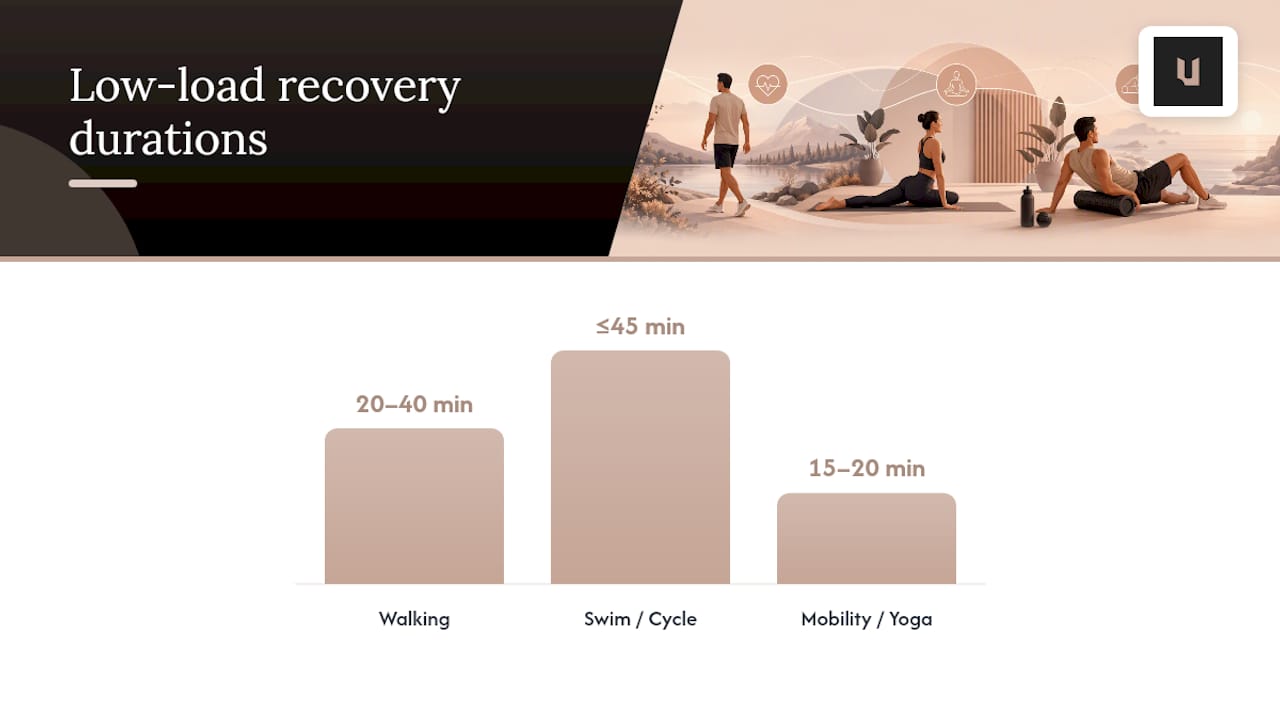
Walking is the easiest place to start. Aim for a period of time within a moderate range at a pace where you could hold a conversation without gasping (the “talk test”). It gets blood moving through tired muscles without adding meaningful fatigue.
Easy cycling or swimming work the same way but take pressure off sore joints. Keep the effort conversational and keep the session to a moderate length so it stays restorative rather than becoming an unplanned workout.
Mobility and gentle stretching feel good and can improve how your joints move, but be realistic about what they achieve. A BMJ systematic review found that stretching before or after exercise has minimal effect on muscle soreness as measured 24 hours later. Do it for comfort, not as a cure for soreness.
Yoga or a guided mobility flow gives you structure without demanding much from your nervous system. Fifteen to 20 minutes, slow breathing, nothing that strains.
Foam rolling or self-massage falls into the same category as stretching. A 2020 systematic review covering multiple studies found small improvements in flexibility and perceived soreness but no significant gains in strength, sprinting or endurance. Use it if it helps you feel better, not because it speeds up recovery on its own.
Light skill work or low intensity play, like shooting a basketball around or a relaxed game of table tennis, keeps you moving without the competitive edge that pushes intensity up.
Restorative leisure matters too: a nap, a hobby, or light household tasks all support mood and give your body a genuine break from training stress.
Pro Tip: Pick one movement option and one restorative option rather than trying to fit everything in. A rest day with too many boxes to tick stops being restful.
Active recovery means light movement that keeps blood flowing without adding real fatigue. A full rest day means no structured exercise at all. Which one you need depends on how your training has gone that week.
The American College of Sports Medicine recommends one to two full rest days during periods of heavy training volume, alongside active recovery on other lower-intensity days. Pacing guidance from University Hospitals Sussex warns against the “over and under” cycle, where you push hard on a good day, crash the next, then overcompensate again once you feel better. Breaking activity into smaller, repeatable chunks avoids that spiral.
Use these cues to decide:
Recovery happens through what you eat, drink and how well you sleep, not through the rest day activity itself. Nutrition guidance from prehab and rehab services recommends eating regularly through the day and spreading protein across meals rather than loading it all into one sitting. A Greek yoghurt with fruit, a handful of nuts, or a chicken wrap all work as protein-rich snacks between meals.

A statistic worth knowing: the same guidance recommends several glasses of fluid a day to support tissue repair and general recovery, a simple target that’s easy to track through a day at home or work.
Sleep is where most of the physical adaptation from training actually happens, so protecting it matters more on a rest day than any single recovery tool. Keep a consistent bedtime, dim the lights an hour before sleep, and avoid heavy meals late at night.
Undereating on a rest day is a common mistake. Guidance on relative energy deficiency in sport warns that fasting or cutting calories on a rest day can raise stress hormones and blunt recovery rather than help it, since everyday activity still requires energy even without a workout.
If something hurts, “rest” doesn’t have to mean total inactivity. Relative rest, keeping movement going in ways that don’t provoke pain while resting the affected area, is often more useful than complete stillness, though persistent or worsening symptoms need a proper assessment from a physiotherapist or GP rather than guesswork.
Pacing tactics borrowed from clinical rehabilitation settings work well here too. Pacing guidance suggests breaking activity into smaller, manageable chunks and keeping the intensity easy enough that you could repeat it tomorrow without dreading it. If you’re managing a longer recovery, our guide to injury prevention training for young athletes covers how to adjust load around pain without losing progress entirely.
Some symptoms are non-negotiable stop signals. Chest pain, unusual breathlessness or a suspected concussion all need clinical oversight before you return to any activity, rest day or otherwise.
Pro Tip: Track how you feel the morning after a rest day activity, not just during it. Next-day response tells you more about whether the pacing was right than how you felt at the time.
A rest day loses its purpose the moment it turns into another hard session. Skip anything that raises your heart rate for long stretches or loads your muscles heavily, that includes long, hard cardio and heavy lifting disguised as “just a light session.”
Avoid slashing your calories because you didn’t train. It won’t speed anything up, and it works against the energy your body still needs for repair. A checklist of signs of overtraining is worth keeping handy if you’re unsure whether a day off is overdue.
Recovery tools like massage guns, cold plunges or compression boots are fine as optional extras, not the main event. Sleep and food do more of the real work than any gadget.
Pick the version that matches how much training you’re doing and how you feel today.
ACSM guidance frames a rest day as a micro-session in its own right: 20 to 40 minutes of low intensity movement plus some mobility is often enough to keep adaptation ticking over without building a fatigue debt.
Physical recovery gets most of the attention, but rest days do just as much for your head. Training hard week after week without a break wears down motivation faster than it wears down muscle, and a rest day is often the difference between staying consistent for months and burning out after a few weeks.
Use the day to do something you actually enjoy rather than something you feel obligated to do. A hobby, time outdoors, or simply an evening without a training plan in your head all count. That mental space matters because motivation isn’t fixed, it dips and rises with how recovered you feel, and pushing through fatigue rarely produces your best training anyway.
Rest days also give you a chance to notice how you’re actually doing, physically and mentally, away from the pressure of a session. That’s often when people realise they’ve been running on low mood or poor sleep for longer than they thought. Treating a rest day as genuinely restful, rather than a guilty pause between workouts, keeps training sustainable for the months and years that actually produce results.
Working with adults over 40 and youth athletes for years has shown one pattern repeatedly: the people who stick with training longest are the ones who treat rest days as part of the plan, not an afterthought. Skipping recovery to chase consistency usually backfires within a few weeks.
Inside small group coaching, we build rest day guidance around each person’s training load that week, adjusting for anyone managing niggles or heavy fatigue. Recovery isn’t separate from progress, it’s what makes progress possible.
— Vitalij
Working out what your body needs on a rest day gets easier with a coach who already knows your training load. Our Small Group PT sessions build recovery guidance into your weekly plan, so rest days support your next session rather than undoing it.
If you’d rather ease in through a class first, our Fitness Classes page covers the options available in Sheffield. Get in touch to find a session that fits your week.
The 3-3-3 rule isn’t a standard clinical or exercise science guideline, and definitions of it vary online. If you’ve seen it referenced for rest days, it’s best treated as a loose personal habit rather than an established recovery method.
Adequate rest and sleep support the body’s stress response and recovery process, while undereating or fasting on rest days can raise stress hormones according to RED-S guidance. Eating enough and sleeping well matters more for managing stress hormones than the rest day itself.
No, ACSM guidance recommends one to two full rest days during periods of heavy training volume. How many you need depends on your training intensity, sleep quality and how quickly you’re recovering between sessions.
There isn’t a single agreed list of seven exercises suitable for daily use, since the right choice depends on your goals and current fitness. Gentle mobility work, walking and light stretching are generally safe daily habits that support recovery without adding meaningful fatigue.