Did you know that 70% of children drop out of organised sports by the age of 13? It's a staggering figure often stemming from burnout or the frustration of frequent injuries. As a parent, you want to see your child thrive on the pitch, but you're likely juggling a hectic school run whilst worrying i...
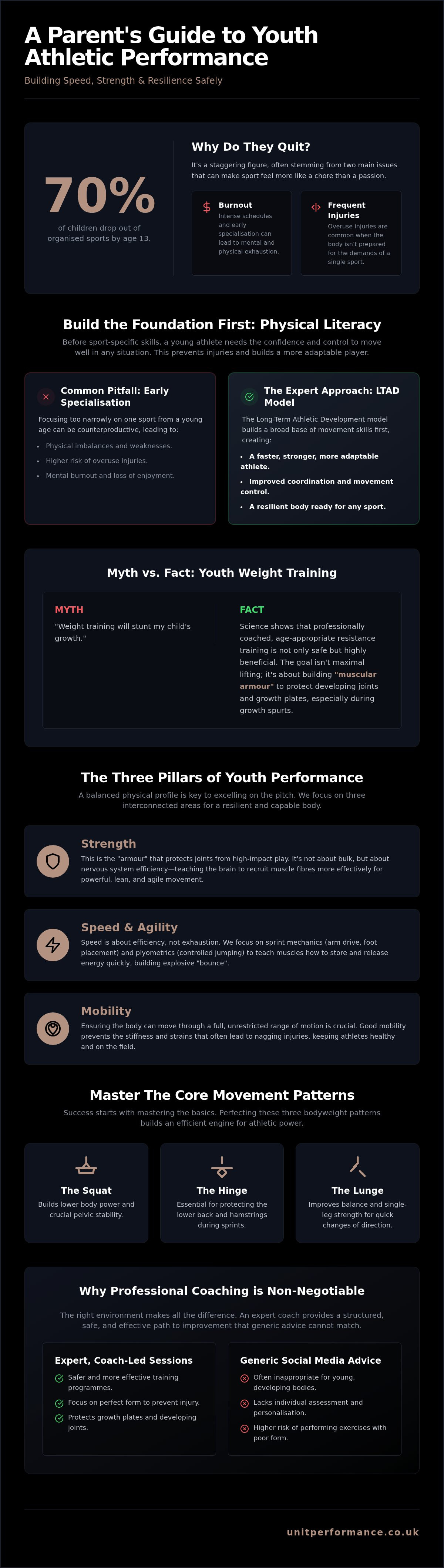
Did you know that 70% of children drop out of organised sports by the age of 13? It's a staggering figure often stemming from burnout or the frustration of frequent injuries. As a parent, you want to see your child thrive on the pitch, but you're likely juggling a hectic school run whilst worrying if gym work might stunt their growth. You aren't alone in wondering how to improve athletic performance young athletes require to stay competitive and safe. We agree that sport should be about building confidence and character, not just surviving a busy schedule.
This guide offers a clear, expert-backed roadmap to help your child build explosive speed and robust strength safely. We'll debunk the myths surrounding youth weightlifting and show you how a coach-led environment can protect their growth plates rather than harm them. You'll discover practical steps to sharpen their agility and reduce injury risks, ensuring they stay in the game they love. We're diving into physical literacy, smart recovery, and the specific training habits that turn potential into lasting performance.
• Prioritise physical literacy to build movement control and prevent the common overuse injuries often caused by early specialisation.
• Learn the mechanics of speed and strength training to understand how to improve athletic performance young athletes need to stay competitive.
• Master the "Total Load" approach to balance school PE and club matches with the rest periods required for peak performance.
• Understand why expert, coach-led sessions are safer and more effective than following generic fitness advice found on social media.
Physical literacy is the cornerstone of any successful sporting career. It's the ability to move with confidence and control across a wide range of physical activities. Many parents feel pressured to have their child specialise in one sport early on, but this often creates physical imbalances. Understanding the dangers of early sports specialization is crucial, as focusing too narrowly can lead to overuse injuries and mental burnout. If you're researching how to improve athletic performance young athletes need to succeed, the answer lies in the Long-Term Athletic Development (LTAD) model. This approach builds a broad base of movement skills first, ensuring a faster, stronger athlete becomes a more adaptable player in any team environment.
The most common concern we hear is that weight training stunts growth. Science tells a different story. When delivered through a professional Youth Athlete Program, structured resistance training is incredibly safe. It's vital to distinguish this from competitive powerlifting. We don't focus on maximal loads for the sake of it. Instead, we use age-appropriate exercises to build "muscular armour" that protects developing joints and growth plates. This foundation is exactly how to improve athletic performance young athletes require to stay injury-free during significant growth spurts.
Success on the field starts with mastering the basics of human movement. Before we look at advanced speed drills, we ensure every athlete can perform three core patterns with perfect form:
Building lower body power and pelvic stability.
Essential for protecting the lower back and hamstrings during sprints.
Improving balance and single-leg strength for change-of-direction speed.
Mastering these bodyweight movements ensures the body moves efficiently. When a player moves with better mechanics, they can generate more power and outpace opponents more effectively. It's about building a robust engine before you try to drive at top speed.
To truly excel, a young athlete needs more than just talent. When parents ask how to improve athletic performance young athletes often find that a balanced physical profile built on three specific pillars works best:
The "armour" that protects joints from high-impact play whilst increasing force production.
The mechanics of accelerating and decelerating effectively to outpace opponents.
Ensuring the body moves through a full range of motion to prevent stiffness and strains.
These elements are the core of effective injury prevention training for young athletes. By addressing these areas, we help them build a body that is as resilient as it is capable.
Speed isn't just about running fast. It's about efficiency. Instead of running until exhausted, we focus on sprint mechanics, such as proper arm drive and foot placement. We also use plyometrics, which are controlled jumping and landing drills. These exercises build "bounce" by teaching the muscles to store and release energy quickly. If you want to chat with our coaches about speed drills, we can show you how these mechanics translate directly to the pitch.
Many parents worry about their child becoming "muscle-bound" too early. In youth training, strength isn't about huge muscles. It's about nervous system efficiency. We're teaching the brain to recruit muscle fibres more effectively. This results in a more powerful athlete who remains lean and agile. This approach is a staple of academy footballer training Sheffield, where performance on the pitch is the priority. Understanding these nuances is key to discovering how to improve athletic performance young athletes need for long-term success. By focusing on these pillars, we ensure your child builds a robust foundation that supports their growth rather than hindering it.
Managing a young person's training schedule is often the hardest part of being a sporting parent. We use a concept called "Total Load" to ensure they aren't overworking. This means looking at the whole week: school PE lessons, evening club practices, and weekend matches. When considering how to improve athletic performance young athletes require a schedule that respects their physical limits. High-intensity days, such as match days, must be followed by low-intensity or rest days to prevent the burnout we so often see in club sports.
We recommend slotting in two coach-led Youth Athlete Training sessions per week. These sessions focus on the pillars we discussed earlier, providing the "muscular armour" needed for their sport without adding unnecessary fatigue. Finally, remember that growth happens during rest. Prioritising 8 to 10 hours of sleep and consistent hydration are the most effective ways to support their development and ensure they stay sharp for the next match.
Active recovery is light movement that helps the body heal without adding more tiredness. It keeps the blood flowing to sore muscles without the impact of a full training session. For teens, this could be a 20-minute swim, a light cycle, or a simple mobility flow in the living room. It's about staying mobile whilst letting the nervous system recharge. This is a vital step to discover how to improve athletic performance young athletes need by focusing on recovery.
Keep nutrition simple by focusing on "real food" rather than expensive supplements. Growing bodies need protein (like chicken, eggs, or beans) to repair muscle tissue and carbohydrates (like pasta, potatoes, or fruit) to provide the energy for those high-intensity days. Timing matters too; a small carb-based snack before training and a balanced meal afterwards makes a huge difference. If you're struggling to balance their busy diary, get in touch with our team for a structured plan that fits around school life.
Social media is flooded with "influencer" workouts that look impressive but often lack the scientific backing required for a growing body. For many parents, figuring out how to improve athletic performance young athletes need can lead them down a risky "DIY" path. Professional coaching is the antidote to this. A specialist coach identifies the subtle movement flaws, such as a slight knee cave or a rounded back, that a team coach or parent might miss during a busy match. This expert eye is what separates a generic workout from a performance-enhancing one.
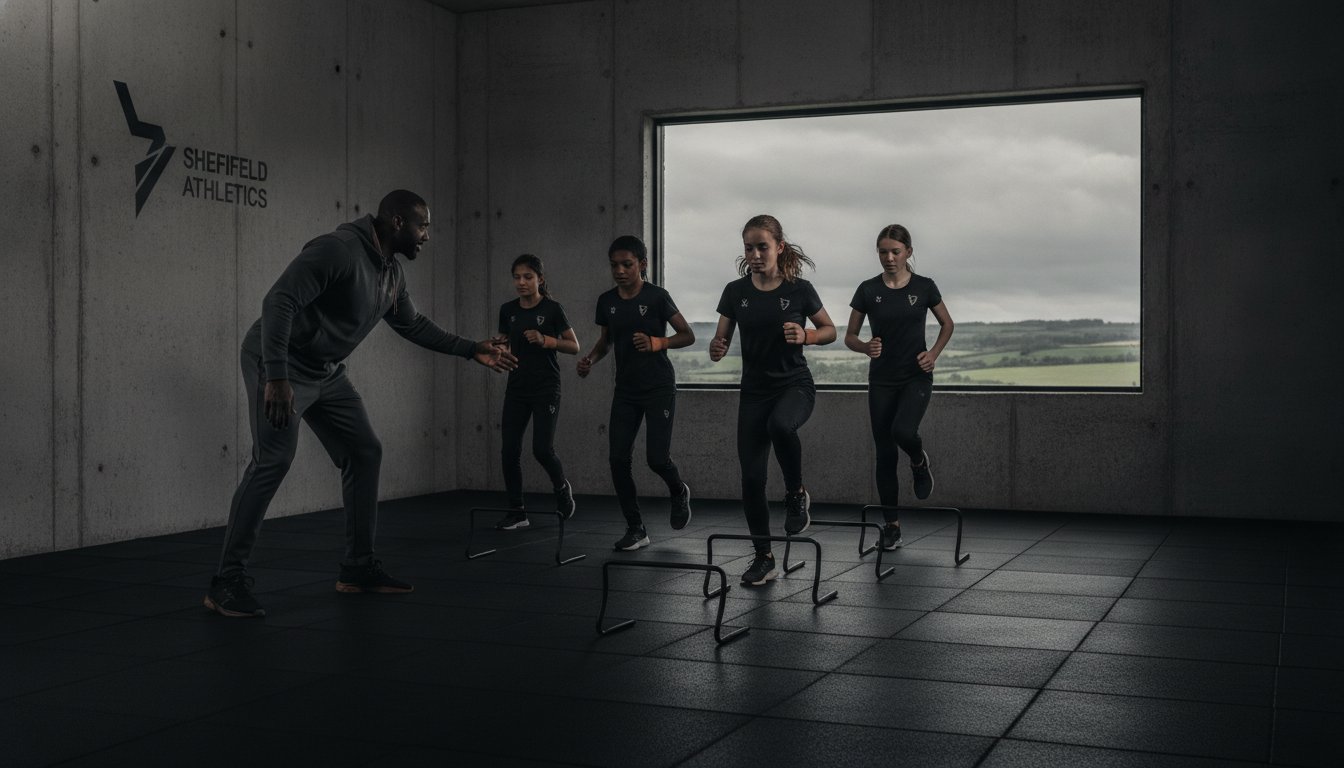
Joining a structured youth athlete program offers more than just sets and reps; it provides a safe, expert-led environment. In Sheffield, we're seeing a clear shift. Parents are moving away from the "solo" commercial gym experience in favour of specialised strength and conditioning Sheffield facilities. It's about trading a generic membership for a community that understands a teenager's physical development and psychological needs.
Small groups hit the "sweet spot" for engagement. Training amongst peers creates a "vibe" that makes hard work feel like a collective movement. It fosters healthy competition whilst ensuring every single rep is performed with the correct technique. Unlike solo sessions, where a teen might cut corners or lose focus, the social accountability of a small group keeps them consistent and motivated over the long term.
Our goal is to build resilience that lasts far beyond their sporting career. We want every young person to feel empowered by what their body can achieve. By mastering their own movement, they gain a level of confidence that carries over into school and their future. To see how our environment can support your child's journey, we encourage you to contact our Sheffield team for a professional assessment.
Helping your child excel in sport is about more than just extra practice; it's about building a resilient foundation. We've explored how physical literacy and the three pillars of strength, speed, and mobility create a robust athlete. By managing their "Total Load" and prioritising recovery, you can protect them from burnout and injury. Understanding how to improve athletic performance young athletes require involves a long-term commitment to quality movement over quick fixes.
At Unit Health & Performance, we provide an expert-led, professional gym environment in Sheffield specifically designed for athletes aged 10+. Our focus is on long-term athletic development within a supportive, coach-led community. If you're ready to give your child the tools they need to thrive on and off the pitch, book a consultation for our Youth Athlete Programme in Sheffield today. Let's work together to build their confidence, strength, and speed in a safe and inspiring setting.
Yes, it's safe when conducted in a coach-led environment that prioritises technique over heavy loads. At age 12, the focus is on mastering bodyweight movements and light resistance. This builds the physical resilience needed for pitch-based sports without risking injury. Structured training actually increases bone density and prepares their joints for the physical demands of high-level competition, provided they have expert supervision throughout every single session.
Two dedicated strength and conditioning sessions per week is the ideal frequency for most developing athletes. This allows enough time to see progress without interfering with school PE or club match schedules. Consistency is far more important than intensity; regular sessions help build the habits required for long-term success. It ensures they stay fresh for their primary sport whilst slowly building the physical foundation they need to excel on the field.
Yes, specialised training is one of the most effective ways to reduce the risk of ACL and knee injuries. By teaching correct landing mechanics and how to decelerate safely, we take the stress off the joints. Strengthening the hamstrings and glutes provides better support for the knee during sudden changes of direction. This is a core part of how to improve athletic performance young athletes need to stay healthy.
Around the age of 10 to 12 is an excellent time to start a structured programme. At this stage, children are highly receptive to learning new movement patterns and building coordination. We don't start with heavy weights; we focus on agility, balance, and basic strength. Starting early helps them develop a positive relationship with the gym and gives them a significant head start in their competitive sporting journey.
Look for signs like persistent tiredness, a sudden drop in school performance, or a loss of interest in their favourite sport. Physical cues include recurring "niggles" or a lack of progress despite training harder. If your child is struggling to wake up or seems unusually irritable, it's a sign their "Total Load" is too high. In these cases, prioritising rest and active recovery is essential for their health.