Drink water for sessions under an hour, add electrolytes and carbohydrate for anything longer or hotter, and never force fluids beyond what thirst asks for. Hydrate before, during and after training, using urine colour as your simplest daily check. Overdrinking is as risky as underdrinking, so the goal is balance, not maximum intake.
TL;DR:
- Most people can rely on drinking to thirst and urine colour checks for hydration, with sweat-rate testing reserved for long, intense, or hot workouts.
- For sessions over an hour or in hot conditions, adding electrolytes and carbohydrates to fluids improves fluid retention and delays dehydration risks.
- The recommended fluid intake is 250 to 750 millilitres per hour during exercise, with post-session rehydration targeted at 150% of fluid lost.
- Overhydration poses risks of exercise-associated hyponatraemia, so avoiding excessive drinking and maintaining sodium intake is essential.
- Personal sweat testing helps tailor hydration strategies, especially for athletes training regularly in heat or endurance events.
Fluid loss affects the body well before you notice obvious symptoms. Blood volume drops, the heart works harder to circulate oxygen, and muscles lose some of their capacity to contract efficiently. This is why hydration status shows up directly in how a session feels and how quickly you bounce back from it.
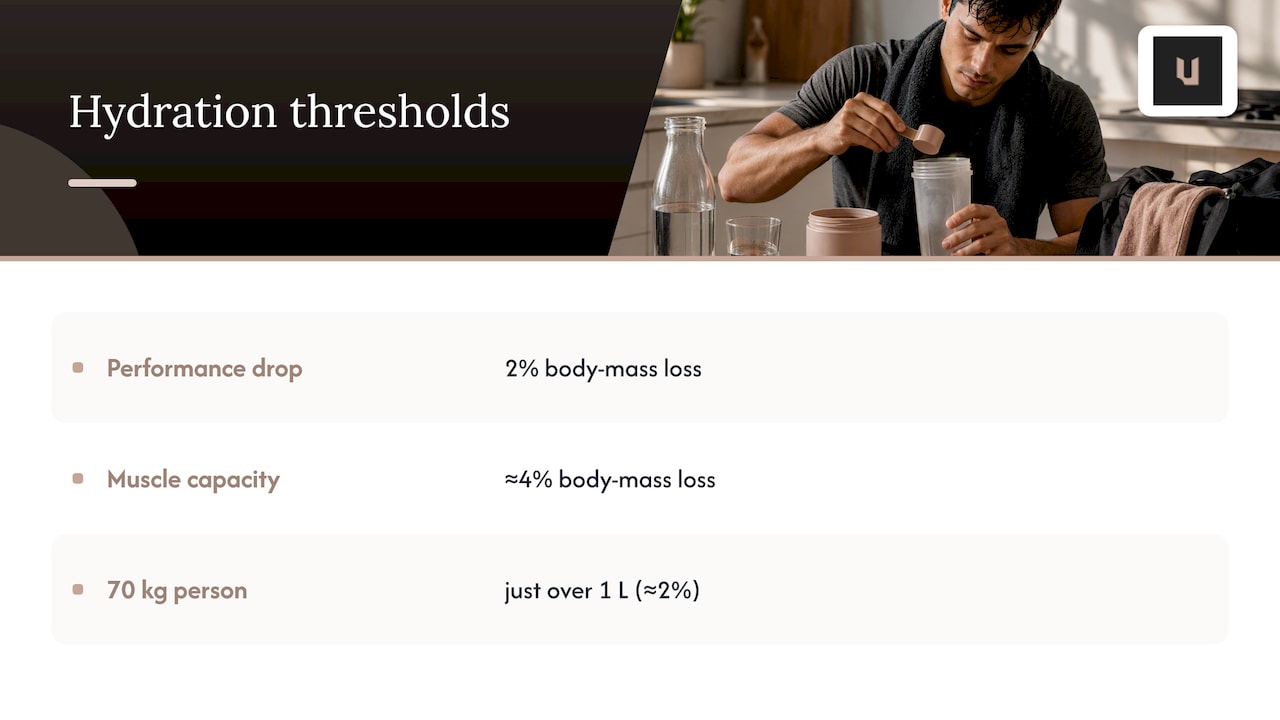
A 2% drop in body mass from sweat loss can impair performance, and losses of around 4% reduce muscular capacity noticeably, with higher losses raising heat-related risk, according to British Cycling. That is a small percentage with a real effect: a 70kg person loses meaningful output after sweating out just over a litre.
Fluid also plays a central role in thermoregulation. Sweating cools the body, but it draws directly from your blood plasma, so heavier sweat losses mean the cardiovascular system has to compensate. Review literature on dehydration and endurance performance backs targeted fluid and electrolyte strategies as a practical way to blunt these effects, rather than leaving hydration to chance (PMC review). The flip side matters too: drinking far more than you lose brings its own risks, which later sections cover in detail.
Getting the timing right matters more than hitting an exact number. A sensible routine looks like this:
This 150% rule comes from the same physiological logic used in sweat-rate testing: replacing exactly what you lost tends to leave you slightly short, because rehydration is never perfectly efficient. For most gym sessions or a moderate run, sipping to thirst and refuelling with a normal meal afterwards is enough. Longer or hotter sessions need a more deliberate plan, which is where electrolyte drinks and sweat testing become useful.
Plain water is the right default for anything under an hour in moderate conditions. Once sessions stretch past 60 to 90 minutes, or the room or weather is hot, sodium losses start to matter and an electrolyte or carbohydrate drink earns its place.
Adding roughly 500 milligrams of sodium before prolonged exercise in heat can help some athletes retain fluid and delay dehydration, but this is best trialled in training rather than tried for the first time on event day, according to the American College of Sports Medicine. Check labels for sodium content and carbohydrate percentage: drinks above about 8% carbohydrate can sit heavy and slow fluid absorption.
Pro Tip: Test any new sports drink or electrolyte tablet in an easy training session first, never on race day or your hardest workout of the week.
Urine colour is the quickest daily check available. NHS guidance recommends aiming for clear, pale yellow urine, and drinking more when you are active, in hot conditions, pregnant or breastfeeding.
For a more precise picture, a sweat-rate test personalises your drinking targets:
Many riders lose between 500 and 1,000 millilitres per hour, which gives a realistic starting range if your own test lands outside that (British Cycling). Use the result to set a drinking target for similar future sessions, adjusting for temperature.
Heat and humidity change everything about a sweat-loss estimate done indoors or on a cool day. Older adolescents can lose between 1 and 2.5 litres per hour in hot conditions, which makes electrolyte access genuinely important for safety, not just performance, per ACSM guidance on youth sports in the heat.
For sessions or events lasting more than two to three hours:
The opposite risk deserves equal attention. Exercise-associated hyponatraemia (EAH) is a dangerous drop in blood sodium, and it is usually caused by drinking more fluid than the body loses, not by sodium deficiency alone (ACSM). For most recreational athletes, drinking to thirst alongside urine-colour checks is a safer default than a rigid volume target, while athletes following a tested sweat-rate plan can use their personalised numbers instead.
Hydration is built into how some training sessions are planned, not treated as an afterthought. Coaches often prompt participants to check in before training starts, particularly during warmer months or ahead of longer conditioning blocks, and encourage a consistent bottle strategy through each session rather than one large drink at the end.
A simple pre-session checklist can cover three things: has the participant had fluid in the past couple of hours, does their urine colour suggest they are starting well hydrated, and is the session long or intense enough to warrant electrolytes. For those training toward specific goals, an occasional weigh-in before and after a session can give a rough sweat-rate estimate that may feed into plan adjustments.
Drinking to thirst and checking urine colour cover most people most of the time. Sweat-rate testing earns its keep once you are training hard for over an hour regularly, training twice a day, or competing somewhere hot.
Acclimatisation matters more than people expect: your sweat rate and sodium losses change over one to two weeks of heat exposure, so a plan built in spring can undersell what you need by midsummer. Pace your fluid intake the same way you pace effort.
— Vitalij

Working out how much to drink, and when, is easier with someone checking your numbers alongside your training load. At Unit Health & Performance, hydration is part of the coaching conversation across Small Group PT sessions, where trainers can weigh in on your fluid strategy as part of a broader, individualised plan rather than a one-off tip. Members training in group formats through the gym’s fitness classes get the same attention when sessions run long or hot.
Parents of young athletes often ask the same questions about heat and fluid loss, and the youth athlete programmes, including The SpeedAcademy and The SuperStrong, build hydration guidance into speed, agility and strength sessions where sweat rates can be considerable. If cramping has been an issue during longer efforts, this guide to hill cramps in runners is a useful companion read on the training side of the problem.
To talk through a hydration-focused assessment or find the right session type, get in touch through Unit Health & Performance.
Sip small amounts regularly rather than drinking in large gulps, aiming for roughly 250 to 750 millilitres per hour depending on sweat rate and heat, as British Cycling suggests. Plain water suits shorter sessions, while sessions over 60 to 90 minutes benefit from adding electrolytes.
There is no established 3-3-3 rule in sports science hydration guidance, so treat any version you see online with caution. The reliable approach remains drinking before, during and after exercise, checking urine colour, and adjusting for heat and session length.
Isotonic sports drinks containing sodium and a moderate amount of carbohydrate can be absorbed at a similar or slightly faster rate than plain water during prolonged exercise, because the added sodium supports fluid retention. This benefit mainly applies to longer or hotter sessions rather than everyday short workouts.
Water remains the standard choice for most training under an hour. For longer or hotter sessions, isotonic sports drinks, electrolyte tablets dissolved in water, and drinks combining sodium with carbohydrate are the practical options, with the right one depending on session length and conditions.
Sweat rate and sodium loss vary significantly between individuals, which is why a sweat-rate test is useful for anyone training hard regularly. Age, heat acclimatisation and session intensity all change how much sodium a given person loses, according to ACSM guidance for youth athletes in heat.